











 |
| STANDARD DATA: Seats 3. Gross wt. 2,500. Empty wt. 1,380. Fuel capacity 67. Engine 150-hp watercooled Hispano Suiza 8-cylinder. PERFORMANCE: Top mph 127. Cruise mph 111. Landing mph 38. Initial climb rate 1,000. Ceiling 18,400. |
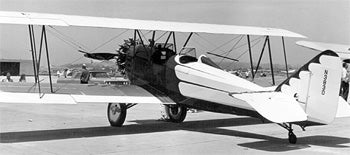
The Lincoln-Page LP-3 was the principal product of the Lincoln Aircraft Co. located in Lincoln, Nebraska. Its president, Victor H. Roos, later named the company when Lincoln and American Eagle merged. The LP-3 was a three-seat open-cockpit biplane in the same class as the Lairds, Swallows, and Eaglerocks. It was powered by any of three different engines: the 150-hp Hispano Suiza eight-cylinder water-cooled engine, the 150-hp Axelson seven-cylinder radial air-cooled engine, or the 90-hp Curtiss OX-5 engine. Its tandem cockpits sat two occupants in the front and one in the rear. The Lincoln-Page featured mixed construction with wooden wings and a steel-tube fuselage. Kin to the LP-3 was the Trainer, a two-seat training biplane. It housed the OX-5 powerplant and could attain a top speed of 105 mph.