











 |
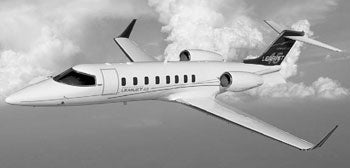
| STANDARD DATA: Seats 9. Gross wt. 20,750. Empty wt. 13,888. Engines two 3,500-lb. Honeywell TFE731-20-AR turbofans. PERFORMANCE: Max cruise 464 kts. Long range cruise 430 kts. Range 2,032 nm. Ceiling 51,000. Takeoff distance (50) 5,250. Landing distance 2,660′. |
In early 1990, Learjet was purchased by Bombardier. The high performing jets fit perfectly into the company’s growing family of personal/corporate/airline transportation. The Lear 45 is Bombardier’s medium size jet market contender, with the first deliveries starting in 1998. As its number designator implies, the Learjet 45 is larger than the model 31, and smaller than the Learjet 60. The flightdeck has been all glass since day one. FADEC-equipped Allied Signal engines make this later version easier to maintain and more fuel efficient than all previous models. In 2002, Bombardier offered a smaller version of the Learjet 45, the model 40. The aircraft is designed for shorter hops with maximum Lear performance. The Learjet 40 features the same engines, cockpit and systems as the Learjet 45, but with a slightly shorter fuselage. The Learjet 40 offers a 36% larger cabin and 35% more range than the Learjet 31 for only a 10% higher price. The 40 can fly with a full passenger load of seven and full fuel. With four passengers, it will travel from New York to Chicago in one hour and 35 minutes.