











 |
| STANDARD DATA: Gross wt. 2,000. Empty wt. 1,175. Fuel capacity 30. Wingspan 25’10”. Length 22’4″. PERFORMANCE: Top mph 225. Cruise mph 175. Stall mph 65. Takeoff run 900. Landing roll 800. Range 570. |
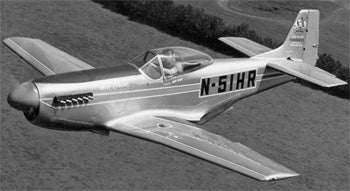
Sportplane enthusiasts have always shown an interest in building replicas of fighter planes. Unlike planes from World War I, World War II ships have been difficult to re-create due to their massive engines, complex metal structure, and sheer size. To facilitate homebuilding, designer Marcel Jurca created scaleddown versions of the P-51 Mustang, the Supermarine Spitfire, and the Focke-Wulf FW-190. The Mustang was designed in 2/3 or 3/4 scale. Only the relative size of a pilot’s head identifies the baby P-51 from its bigger ancestor. The ship first flew with a 200-hp Ranger inline engine. Other engines that can be used include: any of the six-cylinder Rangers, the 125-hp Menasco, the 130-hp Gipsy Major, the 125- to 160-hp Canadian Rambler, or the General Motors Buick F-58. Materials used are wood and fabric.