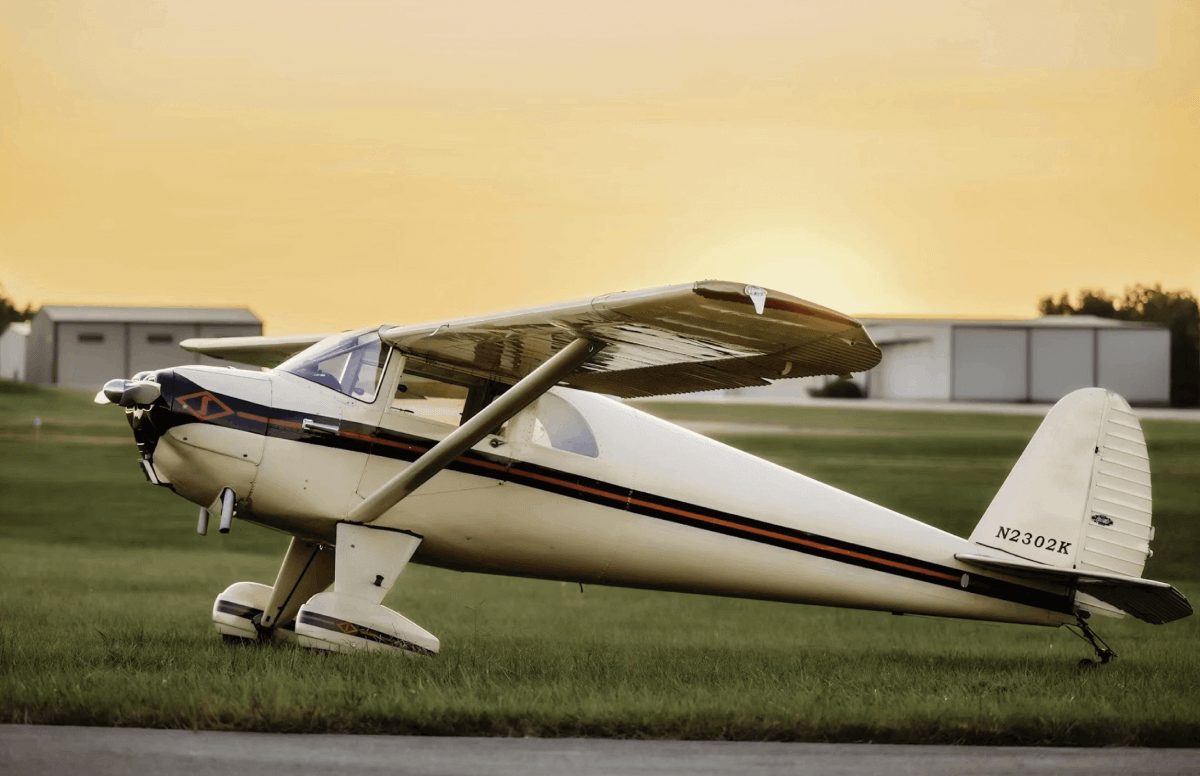












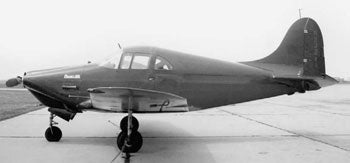
 Johnson “Rocket” |
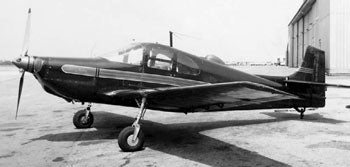 Johnson “Texas Bullet” |
| STANDARD DATA: Seats 4. Gross wt. 2,250. Empty wt. 1,550. Fuel capacity 55. Engine 185-hp Lycoming/185-hp Continental. PERFORMANCE: Top, mph 207. Cruise mph 185. Stall mph 50. Initial climb rate 900. Ceiling 24,500. Takeoff run 600. Landing roll 400. |
This high-performance, three-seat, cabin monoplane was first built in 1946 by Johnson Aircraft, Inc. and was ultimately manufactured in small numbers. The quick and light aircraft was built of all-metal construction with a fabric-covered fuselage. Two persons are seated side-by-side with full dual controls while the third is seated centrally just behind the front seats. In 1950, Aircraft Manufacturing Co. acquired the rights to produce a refined four-seat version of the Rocket, which it called the Texas Bullet. The original Rocket was powered by a 185-hp four cylinder Lycoming engine; the Texas Bullet changed over to a Continental of the same rating. Also, the fabric covering of the Rocket was traded for an all-metal, flushriveted skin, and a redesigned tail was added. The Bullet sported a top speed of 210 mph, a cruise speed of 183 mph, and a climb rate of 900 fpm. Overall, the new refinements added only 100 pounds to the empty weight, and 50 pounds were added to the fully loaded weight. Exhaust gasses from the engine of the Rocket and Bullet were led into a unique “jet assist” cylinder below the fuselage. It was claimed that the device converted engine exhaust into useful thrust at speeds faster than 40 mph. Also, both aircraft made use of a Hartzell hydro-selective two-blade variable-pitch propeller.