











 |
| STANDARD DATA: Seats 4. Gross wt. 2,600. Empty wt. 1,700. Engine 145-hp Warner Super-Scarab seven-cylinder radial. PERFORMANCE: Top mph 150. Cruise mph 135. Landing mph 53. Initial climb rate 660. Range 500. Ceiling 15,500. |
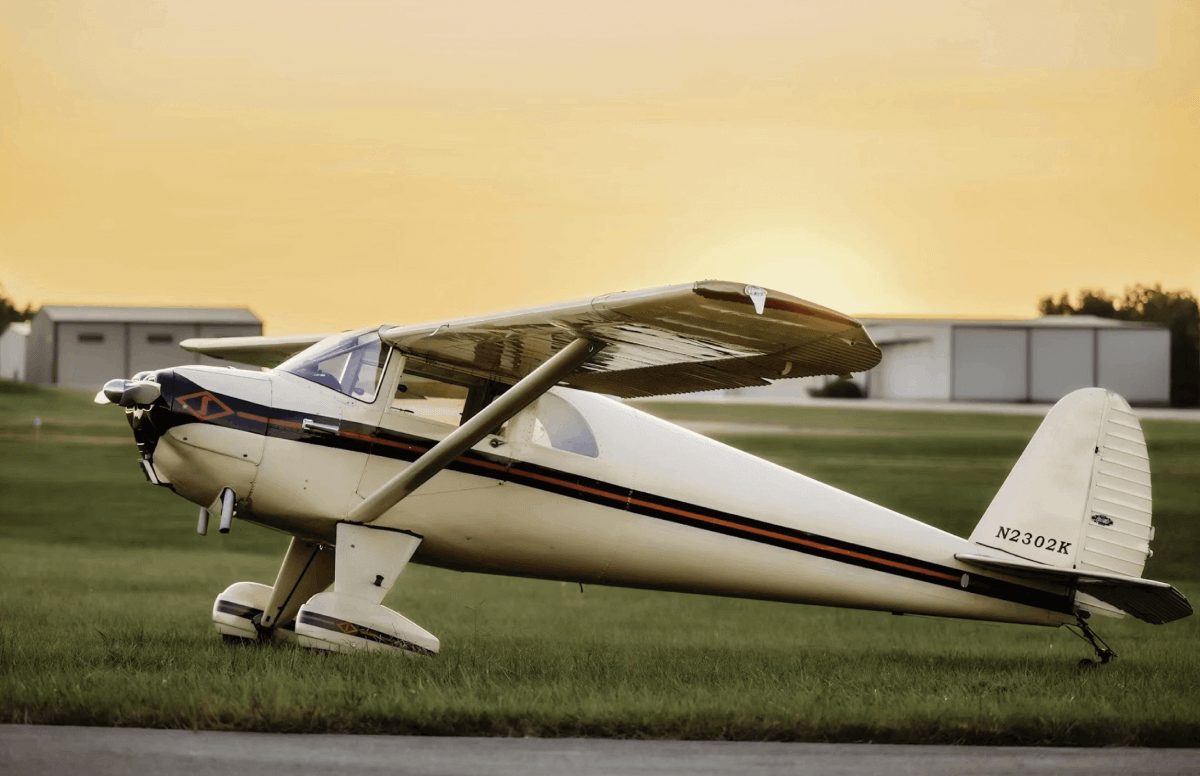
The Harlow Engineering Corp. of Alhambra, California, began production of the Harlow PJC-2 in 1938. In the following year, the company changed its name to the Harlow Aircraft Co. The Model PJC-2 was a fourseat cabin-monoplane of all metal construction and was fitted with retractable landing gear. The Harlow was under development for three years and submitted to over a year of flight testing before it was placed on the market. Production was continued in small numbers until 1941. In that same year, a two-seat training version was produced under the designation of PC-5A. It differed mainly by having a narrower fuselage and a 165-hp Warner SuperScarab engine. PC-5A production lasted until 1942.