











 |
| STANDARD DATA: Seats 4. Gross wt. 3,800. Empty wt. 2,588. Fuel capacity 80-118. Engines two 160-hp Lycomings. PERFORMANCE: Top mph 193. Cruise mph 184. Stall mph 72. Initial climb rate 1,160. Ceiling 17,400. Range 609-966. Takeoff distance (50′) 1,850. Landing distance (50′) 1,330. |
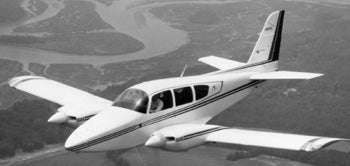
Several twins were called “light” in 1977, but only two were genuinely entitled to the term: the centerline-thrust Cessna Skymaster and the Piper Seneca. Grumman American (now Gulfstream American) entered this uncrowded field late in January 1977 with its Cougar. Competition had grown considerably by 1979. Gulfstream’s fuel-stingy four-place retractable is powered by a pair of 160-hp Lycoming engines, long favored by pilots for their 2,000-hour recommended overhaul period. A single-engine minimum control speed that is slower than its stall speed at maximum gross weight with flaps extended puts the Cougar amongst the safest multi-engine airplanes. Fully fueled and cruising at optimum altitude (8,500 feet) on 75% power, the Cougar can cover 970 miles while retaining a 45-minute reserve. The maximum range power setting (45% power) yields 1,350 miles. Seating is for four, but the Cougar’s cabin is easily large enough to accommodate six. Like single-engine models in the Gulfstream line, the light twin makes use of the same space-age metal-to-metal bonding construction techniques throughout. It also incorporates such sophisticated materials as a high-strength honeycomb “aluminum sandwich” slab that is extensively used in many high-performance military jets.