











 |
| STANDARD DATA: Seats: 15; Gross weight: 13,250 lbs.; Empty weight: 7,800 lbs.; Engines: three 425 hp Pratt & Whitneys. PERFORMANCE: Top speed: 140 mph; Cruise speed: 115 mph; Landing speed: 60 mph; Range: 500 nm; Service ceiling: 20,000 ft. |
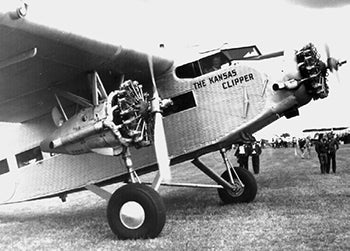
The “Tin Goose” is perhaps the most important aircraft in U.S. airline history. The original Stout Metal Airplane Company was purchased in 1925 by Henry Ford. The new division of the Ford Motor Company produced three versions of the Tri-Motor monoplane. The 4-AT-E was fitted with three 300 hp Whirlwinds. The 6-AT utilized the same engine, but had a larger wing area and accommodations for 13 instead of 11 passengers. The 5-AT-B was outfitted with the same wings and number of seats, but differed by having the more powerful 425 hp Pratt & Whitney “Wasp” engines. The Tri-Motor’s fuselage was constructed from a series of transverse duralumin bulkheads covered with corrugated metal skin. One engine was mounted in the nose, while the other two were suspended underneath the wings.