











 |
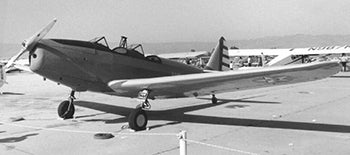
| STANDARD DATA (PT-26): Seats: 2; Gross weight: 2,741 lbs.; Empty weight: 2,022 lbs.; Fuel capacity: 45 gals.; Engine: 200 hp Ranger. PERFORMANCE: Top speed: 126 mph; Cruise speed: 114 mph; Stall speed: 53 mph; Initial climb rate: 675 fpm; Range: 450 nm; Service ceiling: 17,300 ft. |
The Fairchild PT-19 was designed as a tandem two-seat primary trainer for use in the United States and Canada. Full-scale production began early in 1940, and by the end of the war, 5,401 PT-19s had been built in Canada, the United States and Brazil. PT-19s were operated by Civilian Pilot Training schools throughout the war in conjunction with the Army Air Force, the principal user. In Canada, the aircraft was known as the Cornell. The PT-19 was powered by a 175 hp, six-cylinder, in-line, inverted Ranger engine and could cruise at 113 mph for about 430 miles. Two other versions of the basic airframe also were produced. These were the PT-26, which featured an enclosed cockpit and a 200 hp Ranger engine, and the PT-23, which resembled the original PT-19 but utilized a 220 hp Continental radial engine. A few civilian models of the Cornell were also produced; these were known as M-62s.