











 |
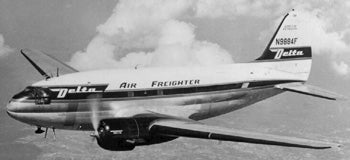
| STANDARD DATA: Seats 40. Gross wt. 45,000. Empty wt. 29,483. Fuel capacity 1,400-2,200. Engines two 2,000-hp Pratt & Whitney Twin Wasps. PERFORMANCE: Top mph 265. Cruise mph 227. Landing mph 71. Climb to 10,000 13.5 minutes. Range 2,994. Ceiling 24,500. |
The first Curtiss-Wright C-46 production models were delivered in 1941 to help fulfill the needs of the Air Transport Commands during World War II. In its military transport configuration, it can carry 16,000 pounds of cargo or 50 fully equipped troops. The civilian version contains 36 passenger seats. Nearly 400 commercial models remain in service in North and South America. A total of 3,180 “Commandos” were produced during World War II, and a large number of these serve in Chinese, Japanese, Korean, and South American Air Forces. In appearance, the C-46 is very similar to the Douglas DC-3, but the Curtiss’s greater wing area, larger fuselage, and 1,600 extra horsepower made the C-46 a much more versatile workhorse.