












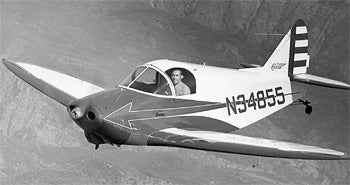
CULVER CADET

1939’€“41

Gemini Sparkle

Key Takeaways:

  • Culver Aircraft Co. was formed in 1939, taking over Dart Manufacturing's production and designing the "Cadet" aircraft.
  • The Cadet was modified into the Model LCA by 1940, with production ceasing in 1941 as Culver focused on military contracts.
  • Two versions were produced: the LCA, powered by a 75-hp Continental engine, and the LFA, featuring an 80-hp Franklin engine.
  • These two-seat aircraft offered a top speed of 140 mph, a cruise speed of 120 mph, and a range of 600 miles.
See a mistake? Contact us.
STANDARD DATA: Seats 2. Gross wt. 1,305. Empty wt. 730. Fuel capacity 20. Engine 80-hp Franklin or 75-hp Continental.
PERFORMANCE: Top mph 140. Cruise mph 120. Stall mph 45. Initial climb rate 800. Range 600. Ceiling 17,500.

The Culver Aircraft Co. was formed to take over Dart Manufacturing Corporation’s production of the Dart Model G in 1939. A new aircraft, similar to the Dart in appearance, but smaller, was designed and soon became known as the Cadet. The aircraft was modified and in 1940 became the Model LCA. Production of the wooden aircraft lasted until the next year when the Culver company closed its civilian works to concentrate on military contracts. The LCA was powered by a 75-hp Continental engine, while a similar version, the LFA, was powered by an 80-hp Franklin four-cylinder engine.


Plane & Pilot

Plane + Pilot is general aviation’s only adventure-based magazine. From where to go, to how to get there, and everything in between, your next great adventure awaits.
Subscribe to Our Newsletter

Get the latest Plane & Pilot Magazine stories delivered directly to your inbox

SUBSCRIBE