











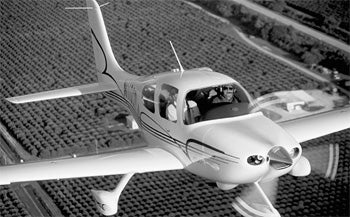
 Cirrus SR20 |
| STANDARD DATA: (SR20/SRV) Seats 4. Gross wt. 3,000 lbs. Empty wt. 2,070/2,050 lbs. Usable fuel capacity 56 gallons. Engine 200-hp Continental IO 360-ES. PERFORMANCE: Cruise 150 kts. Stall 54 kts. Initial climb rate 900 fpm. Takeoff distance (50′) 1,958′. Landing distance (50′) 2,040′. |
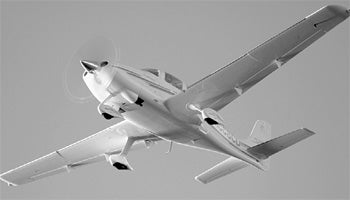 Cirrus SR22 |
| STANDARD DATA: (SR22) Seats 4. Gross wt. 3,400 lbs. Empty wt. 2,250 lbs. Usable fuel capacity 81 gallons. Engine 310-hp Continental IO-550-N. PERFORMANCE: Cruise 185 kts. Stall 54 kts. Initial climb rate 1,400. Takeoff distance (50′) 1,575′. Landing distance (50′) 2,325′. |
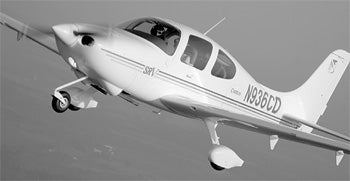 Cirrus SRV |
When aviation suffered serious economic setbacks in the first half of the 1980s, Cessna, the world’s largest general aviation manufacturer simply stopped producing single-engine aircraft. Other manufacturers, such as Piper and Mooney and Beechcraft, saw their production runs dwindle to a mere fraction of what it once was. Needless to say, very little innovation came from the traditional airplane manufacturers.
Instead the innovations began to come from homebuilders. Free from the financial burdens of certifying their airplanes, experimental/home built/kit plane builders were free to explore new methods of construction and aerodynamic design.
Two of the new players were brothers, Dale and Alan Klapmeier, who established Cirrus Design Corporation in 1984. Three years later they debuted their first airplane, the VK-30, interesting in that it was made of carbon composite fiber, instead of aluminum. By 1994, the Klapmeiers were showing off a new composite airplane, the Cirrus SR20, which boasted two new important firsts in general aviation: an airframe parachute, and large multi-function display screen on the instrument panel.
By 1998, Cirrus had been awarded a FAA type certificate for the SR20, and in 1999 delivered their first aircraft. By 2001 they introduced a new version of their composite, the SR22, this time with more power and a slightly longer wing. In less than a decade, Cirrus Design developed into one of the world’s major aircraft manufacturers.
In 2002 the company began production of the SRV, the “V” signifying VFR only. The aircraft was a simplified version of the SR20 and took its place as the Cirrus entry-level aircraft.