











 |
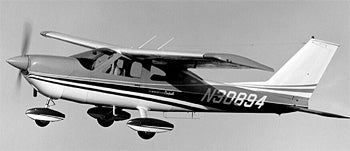
| STANDARD DATA: Seats 4. Gross wt. 2,500. Empty wt. 1,533. Fuel capacity 50-61. Engine 180-hp Lycoming. PERFORMANCE: Top mph 160. Cruise mph 150. Stall mph 53. Initial climb rate 840. Ceiling 14,600. Range 636-776. Takeoff distance (50′) 1,400. Landing distance (50′) 1,220. |
Don’t confuse the 1968 and 1969 Cardinal with the 1970 through 1973 models. The original 1968 Cardinal was powered by a 150-hp Lycoming engine. It soon became obvious that the 150 hp just couldn’t do the job, so a replacement 180-hp Lycoming was installed in 1969. Cessna made a major change on the Cardinal for 1970 with a revised airfoil that much improves lowspeed handling. The airplane also has a constant-speed propeller and cowl flaps, moving it out of the Skyhawk class and into the realm of the Skylane. It could be fitted with optional children’s jump seats and offered a range of more than 800 miles. The new wing allowed safe low-speed approaches, and the engine/prop combination yielded fine takeoff, climb, and go-around performance. The 1970 models replaced the earlier straight wingtips with drooping conical camber tips.