











 |
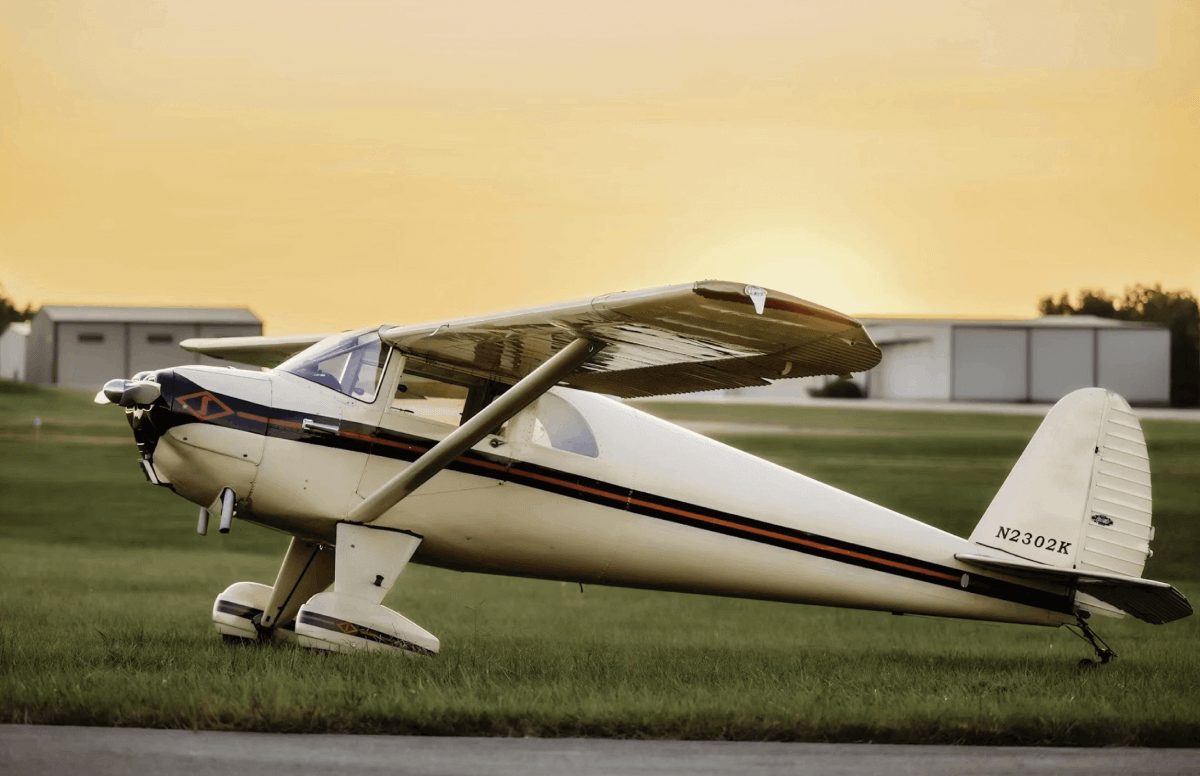
| STANDARD DATA: (A-1) Seats 2-3. Gross wt. 1,550. Empty wt. 1,000. Fuel capacity 25. Engine 100-hp Lycoming. PERFORMANCE: Top mph 115. Cruise mph 105. Stall mph 40. Initial climb rate 500. Ceiling 13,000. Range 260. STANDARD DATA: (A-2, A-3). Seats 2. Gross wt. 1,550. Empty wt. 975. Fuel capacity 30. Engine 125- hp Lycoming. |
The first CallAir flew in 1941 and was designated the Model A. The last version was introduced in 1957 and was named the A-6. Throughout the years of its existence, the basic difference between any of the models was the powerplant; otherwise, the Model A-4 differed little externally from the original Model A. The CallAir was built with mixed construction: fabric-covered wooden wings and a fabric-covered steeltube fuselage. The Model A-2, with a 125-hp Lycoming, and the Model A-3, with a 125-hp Continental, were produced during the years between 1946 and 1948. The first production models of the A-4 appeared in 1955, and the major refinement was the addition of 25 more horsepower with the installation of a 150-hp Lycoming. All models shared the same two-to three-seat cabin and low wing with exposed struts.
Another version of the CallAir was introduced in 1956 and was basically an agricultural development of the Model A-4. Designated the A-S, it was normally flown as a singleseater with the cockpit offset to the starboard side due to the inclusion of the dust hopper. The Model A-6 flown in 1957 was identical, apart from another jump in horsepower to a 180-hp Lycoming. The Intermountain Manufacturing Co. developed a series of low-priced agricultural aircraft from the CallAir, and the first airplane rolled off the production line in 1963. The A-9 featured a 235-hp Lycoming; its top speed was now 130 mph, and its climb rate was now 650 fpm. The dust hopper was moved to a position in front of the cockpit.