











 |
| STANDARD DATA: Seats 1. Gross wt. 8,800. Empty wt. 6,375. Fuel capacity 136. Engine 1,325-hp Allison. PERFORMANCE: Top mph 410. Cruise mph 378. Initial climb rate 3,500. Ceiling 43,000. |
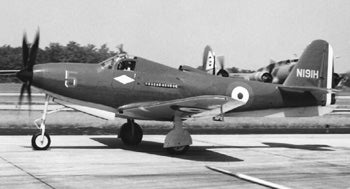
Bell began development of the P-39 Aircobra in 1937 to meet the need for a fighter with great firepower. The design was quite radical for its time, featuring tricycle gear and an engine that was mounted behind the pilot. The propeller was driven by a drive shaft that ran between the pilot’s legs. Mounted in the nose was a 37mm cannon. Though nearly 10,000 of this type were built, it was unspectacular as a fighter and eventually found a role as a tank-buster on the Russian front. A greatly modified development of the P-39, the P-63 King Cobra, was designed in 1942. Easily recognized by its larger tail surface and more prominent airscoop, the King Cobra also met with an unenthusiastic reception. Of those that weren’t lend-leased to Russia, many were converted into target planes for use with dummy bullets. A few King Cobras have been altered for racing. Several exist in flying condition.