











 |
| STANDARD DATA: (Trainer) Seats 2. Gross wt. 1,560. Empty wt. 975. Fuel capacity 24. Engine 108-hp Lycoming. PERFORMANCE: Top mph 138. Cruise mph 124. Stall mph 60. Initial climb rate 705. Range 435. Ceiling 12,750. Takeoff distance (50′) 1,590. Landing distance (50′) 1,100. STANDARD DATA: (Yankee) Seats 2. Gross wt. 1,500. Empty wt. 963. Fuel capacity 24. Engine 108-hp Lycoming. |
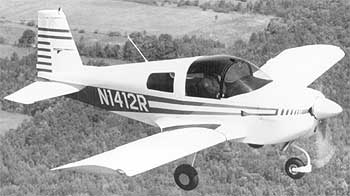
The American AA-I Yankee and its improved version, the AA-IA Trainer, started out as the James Bede-designed BD-I. After acquiring the design from Bede in 1964, American Aviation did some extensive redesign work and put the two-place Yankee into production in 1967. Conceived as a low-cost sport or utility aircraft, the Yankee incorporated several new construction techniques, including the use of aluminum honeycomb panels as the primary structural members and metal-to-metal bonding instead of rivets or bolts. The wing spar is a heavy aluminum tube that also houses the fuel supply. The wing ribs are bonded to the spar. Large bonded-on skin panels virtually eliminate all seams, and there are no protruding rivet heads to create drag.
The AA-IA Trainer was introduced in 1971 and soon replaced the Yankee. It incorporated a modified wing with improved low-speed characteristics, some changes in optional equipment, and a propeller with improved cruising performance. Grumman American Aircraft Corp. ultimately took over the production of the Trainer and added more versions based on the basic airframe design.