











 |
| STANDARD DATA: Seats 2. Gross wt. 1,400. Empty wt. 850. Fuel capacity 23. Engine 90-hp Continental. PERFORMANCE: Top mph 120. Cruise mph 110. Ceiling 19,000. Initial climb rate 750. Landing speed 49. |
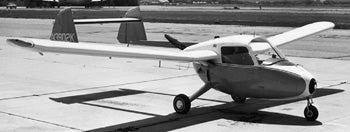
The Anderson Greenwood enjoyed an extremely short production life. First produced in 1950, only four aircraft were completed before production was terminated. Today, only two are active. The twin-boom tail assembly and pusher design of the Anderson Greenwood made for easy cabin entry (like that of an automobile), propeller safety, and excellent visibility. The aircraft was designed in the late 1940s by three engineers, Anderson, Greenwood, and Slaughter, the latter being left out of the plane’s name for obvious reasons. Cessna later imitated the Anderson Greenwood’s design with the one-time experimental XMC. Occupants are seated in side-by-side fashion, and the cockpit has dual controls. There is a door on each side of the cabin.