









Stepping Out
About halfway through autorotation training, we took a brief intermission and fulfilled the course requirement for a dual cross-country.
The weather for our dual cross-country was perfectly VFR, albeit hot with gentle winds. As a licensed commercial airplane pilot flying a route with mega landmarks galore, I found navigation was a breeze.
It was a stunning flight.
What wasn’t a breeze? Not letting go of the controls (well, except the collective at altitude momentarily to scratch my nose or switch Unicom frequencies).
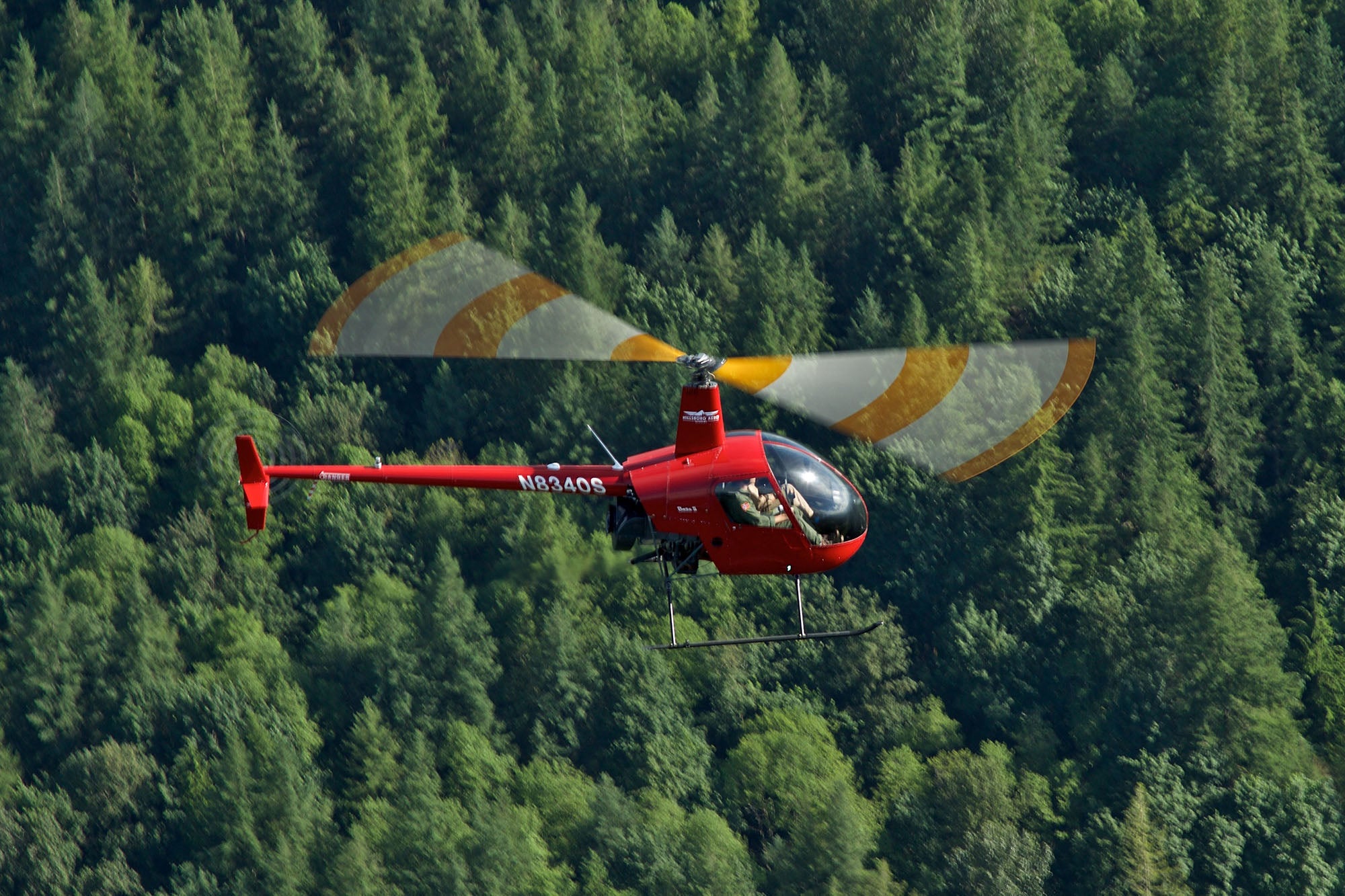
And the collective was especially heavy in the ship we were flying. In fact, my arm was getting tired—I felt like I was holding the ship up with my left arm. However, soon enough, we arrived at our mid-course fuel stop, and I forgot about my tired arm and started sweating the set-down by the fuel pump.
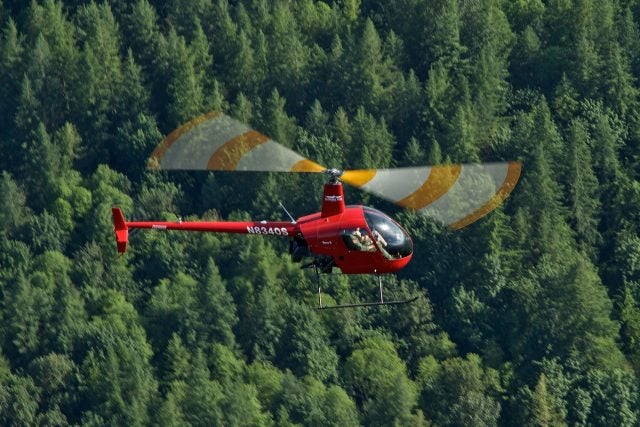
Other than these two minor discomforts, the flight was beautiful. How could it not be with a “floor to ceiling” bubble windscreen and a beautiful Northwest summer day?
Then came the solo cross-country. That was a huge milestone. Without the security of an instructor, things get real, and I think smart student pilots change demeanor on a first solo flight—if we are smart, we start telling the instructor (who isn’t there) everything we are thinking, doing and thinking about doing.
After departing Troutdale to the north past Battleground VOR, away from the airport traffic and cruising at 1500 feet, secure that the ship was running smoothly and on course, I relaxed for a second and was hit with the same sense of wonder, excitement and accomplishment that my 16-year-old self had felt all those years ago. I was that kid again on his first solo in a J-3 Cub. And I’m not ashamed to say that I teared up for just a moment, long enough to lubricate the biggest smile to cross my face in decades.
What I didn’t know was that this was just the start.