











 |
| STANDARD DATA: Gross wt. 1,817. Empty wt. 1,125. Fuel capacity 35. Wingspan 30′. Length 21’2″. Engine 150-hp Lycoming. PERFORMANCE: Top mph 148. Cruise mph 130. Stall mph 52. Climb rate 1,450. Ceiling 22,000. Takeoff distance (50′) 440. Landing distance (50′) 450. Range 525. |
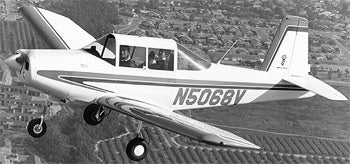
Veteran Douglas test pilot William Morrisey guessed that the thousands of returning World War II pilots would be eager to climb into a tandem sport plane that had all the charisma of a military trainer. After battling the FAA’s red tape for some years, Morrisey sold out to Clifford Shinn, who built some 35 planes before quitting. The tandem two-seater was renamed Kachina and marketed by George Varga. The fuselage is built of chrome moly tubing with removable metal side and bottom panels for quick inspection. The left side of the greenhouse canopy swings open for entrance to the cockpit. The Kachina’s big appeal is not only reasonable cost but sheer fun of flying.
In its last three years of production, Varga offered the more powerful 180-hp variant.