











 |
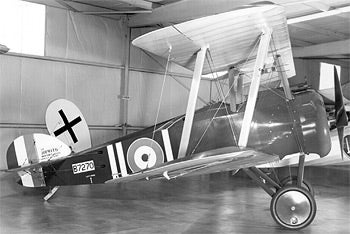
| STANDARD DATA: Seats 1. Gross wt. 1,453. Empty wt. 929. Fuel capacity 31.5. Engine 130-hp Clerget, 110-hp Le Rhone Rotary, 150-hp Dentley, 100-hp Monosoupape. PERFORMANCE: (130 hp). Top mph 1,113. Initial climb rate 1,080. Range 300. Ceiling 19,000. |
The Sopwith Camel holds the unique distinction of having achieved the highest number of aerial victories in World War I. This is especially amazing because the Camel entered combat during the latter part of 1917 when the war was just about over. During those final months, the Sopwith shot down 1,294 enemy fighters, bombers, and Zeppelins. The Camel received its nickname because the receivers of the two Vickers machine guns were covered by two humplike projections. It was the most highly maneuverable fighter of the war but quite tricky to master. The short and compact airframe coupled to the large torque-producing rotary engine made right-hand turns occur incredibly fast.