












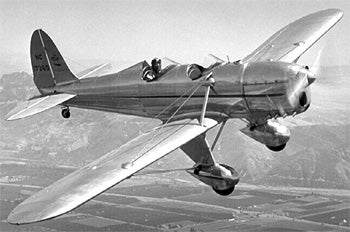
RYAN STM-2

1934’€“42

Gemini Sparkle

Key Takeaways:

  • Ryan Aeronautical Co., successor to the firm that built Charles Lindbergh's plane, was revived in 1934 after a Depression-era closure.
  • The revived company began producing the two-seat ST monoplane series, which included models like the ST, STA (with a 125-hp Menasco engine), and STA Special.
  • Military versions, the STM1 (sold to Latin American countries) and the STM2 (designated PT-20 by the U.S. Army Air Corps), were also developed from the ST series.
  • Many aircraft from this series, featuring a 150 mph top speed and a 350-mile range for the 125-hp engine variant, remain active today.
See a mistake? Contact us.
STANDARD DATA: Seats 2. Gross wt. 1,600. Empty wt. 1,027. Fuel capacity 24. Engine 125-hp Menasco C-4.
PERFORMANCE: Top mph 150. Cruise mph 127. Stall mph 42. Initial climb rate 1,200. Range 350. Ceiling 17,500.

The Ryan Aeronautical Co. was a successor to the Ryan Co. that produced the airplane Charles Lindbergh used to cross the Atlantic. The company benefited from the airplane boom that followed but succumbed to the Depression in 1931. In 1934, the company was revived and began building the ST two-seat monoplane series. There were three models: the ST with a 95-hp Menasco, the STA with a 125-hp Menasco, and the STA Special with a 150-hp Menasco. For military purposes, the STM1 was built with the 150-hp engine and sold to many Latin American countries. It was followed by the STM2, which embodied several modifications specified by the U.S. Army Air Corps and was designated the PT-20. Numerous aircraft of this type are still active.

Plane & Pilot

Plane + Pilot is general aviation’s only adventure-based magazine. From where to go, to how to get there, and everything in between, your next great adventure awaits.
Subscribe to Our Newsletter

Get the latest Plane & Pilot Magazine stories delivered directly to your inbox

SUBSCRIBE