











 |
| STANDARD DATA: Seats 2. Gross wt. 1,610. Empty wt. 1,000. Fuel capacity 14. Engine 115-hp Lycoming. PERFORMANCE: Top mph 156. Cruise mph 135. Stall mph 40. Initial climb rate 1,100. Range 600. |
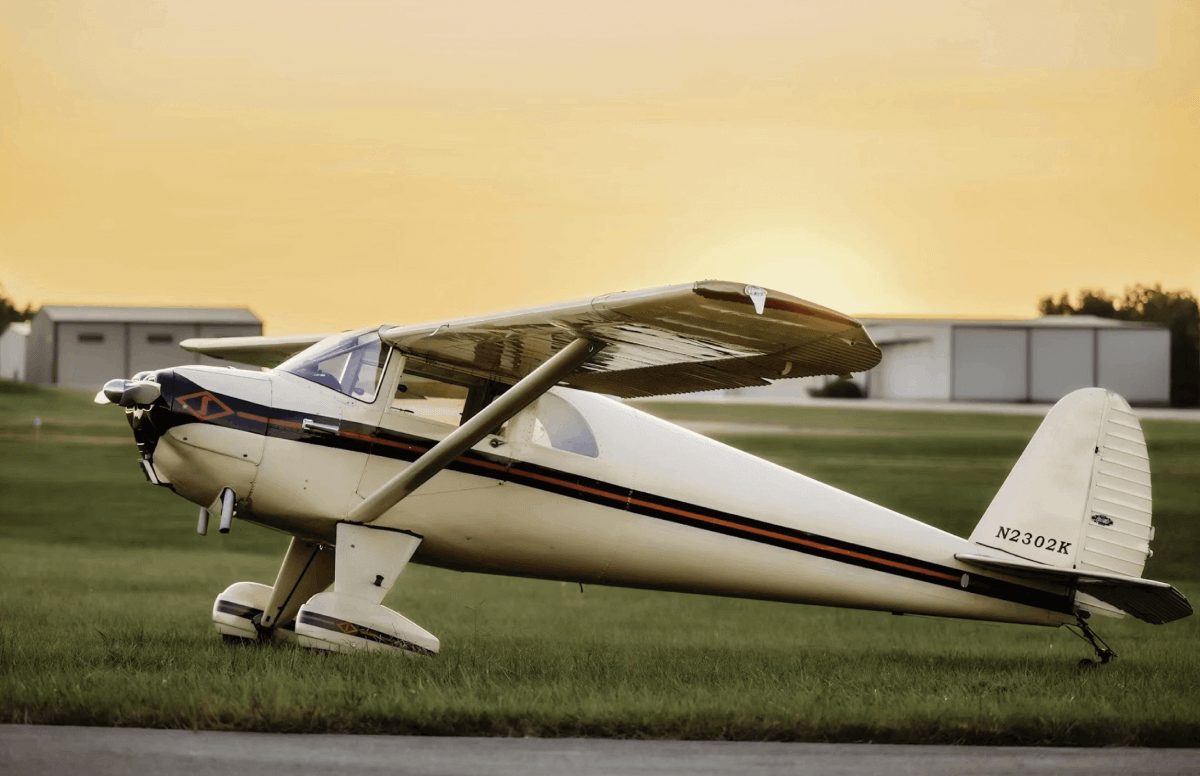
Introduced by the Monocoupe Corporation in 1930, the Model 90A two-seat cabin monoplane was progressively improved until production was suspended in 1942. These early Monocoupes were powered by various engines, including the 90-hp Lambert, the 90-hp Franklin, and the Warner 125-hp Scarab or 145-hp Super Scarab. The main tanks were mounted in the wing roots, providing gravity feed to the engine. Seating was for two in side-by-side fashion with access by means of doors on either side. The fuselage was of welded steel tube construction, while the wings were of wood. All surfaces, save the aluminum leading wing edges, were fabric covered. After a five year lapse in production, the Monocoupe was again built utilizing the same basic airframe but changing to either the 125- or 115-hp, Lycoming horizontally opposed air-cooled engine.