











 |
| STANDARD DATA: (Mk I) Seats 7. Gross wt. 5,100. Empty wt. 3,000. Fuel capacity 95-138. Engine 450-hp Pratt & Whitney. PERFORMANCE: Top mph 140. Cruise mph 135. Stall mph 60. Initial climb rate 1,020. Range 778. Ceiling 18,000. Takeoff distance (50′) 1,015. Landing distance (50′) 1,000. STANDARD DATA: (Mk III) Seats 7-9. Gross wt. 5,370. Empty wt. 2,760. Fuel capacity 191. Engine 578-eshp Pratt & Whitney turboprop. |
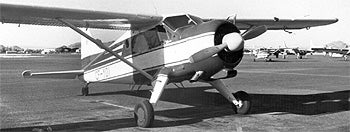
The Beaver first entered production in March 1948 and was the first in a family of STOL utility aircraft designed primarily for use in the Canadian bush. Since that time it has found great favor in a variety of civilian and military roles throughout the world. Beavers have had an excellent reputation of performing under the most difficult conditions, especially in Northern Canada, Alaska, Korea, and Vietnam and are noted for their ruggedness and short-field capability. The Mark I Beaver was the first in the series and was powered by a 450-hp nine-cylinder radial. The Mark III, which first became available in 1964, was designated the TurboBeaver. Accommodations were altered to seat up to nine passengers, and a 578-eshp (estimated shaft horsepower) turboprop with increased fuel capacity was installed. The starboard seat in the pilot’s compartment is removable, and the cabin floor is stressed to handle freight. The Beaver’s controls feature dual rudder pedals and a Y-type control column with a throw-over wheel.