











 |
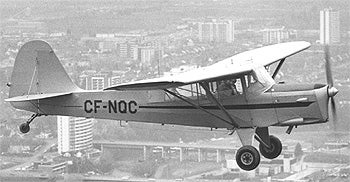
| STANDARD DATA: Seats 2. Gross wt. 2,200. Emptywt. 1,480. Fuel capacity 19. Engine 145-hp de Havilland Gipsy Major. PERFORMANCE: Top mph 122. Cruise mph 107. Stall mph 34. Initial climb rate 660. Range 315. Ceiling 12,000. Takeoff run 375. Landing roll 270. |
The Auster was a continuation of the British Taylorcraft Model D, which was in turn produced under license from Taylorcraft in the United States. The first Austers were produced in 1942 as air observation-post monoplanes powered by 130-hp Gipsy Major engines. Later versions were fined with various powerplants including: 130, 160, and 180-hp Lycomings; 75hp Continental; 145-hp Gipsy Major; and 100-hp Blackburn Cirrus Minor. Most had accommodations for two seated in tandem fashion, but some were converted to three and fourseaters. In 1962, Auster Aircraft, Ltd. was absorbed into Beagle Aircraft, Ltd. and became Beagle Auster. The Husky was introduced in 1960 with a 160-hp Lycoming and then in 1962 with a 180-hp Lycoming. The Terrior, a redesigned version of the early MK 6, was produced in 1961 with the same 145-hp de Havilland powerplant.