











 |
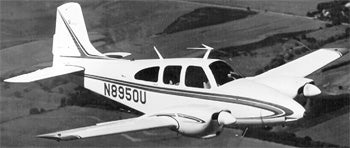
| STANDARD DATA: (E95) Seats 4-5. Gross wt. 4,200. Empty wt. 2,650. Fuel capacity 112. Engines two 160-hp Lycomings. PERFORMANCE: Top mph 240. Cruise mph 200. Stall mph 75. Initial climb rate 1,250. Range 1,035. Ceiling 18,100. Takeoff distance (50′) 1,280. Landing distance (50′) 1,590. |
The Beechcraft Travel Air was the lowest priced light twin in the post-World War II lineup from the Wichita airframe maker. When the Model 95 Travel Air was in its prototype stage in 1956, it was known as the Badger. It entered production in 1958 with a factory list price of $49,500. In the 10 following years, the Travel Air was subject to a few major changes. Engine power output remained at 180 hp on all models, with carburetors being replaced by fuel injectors in 1964. In that same year, the cabin was stretched an additional 20 inches. The factory list price rose in 1968 to $153,500 including avionics. For this kind of money, the Travel Air, on a competitive basis, was an excellent value. In all these years and changes, the basic performance figures of the Travel Air differed only slightly. Top speed varied only by a mile per hour or so, cruise rose from 195 to 200, and range and altitude held constant. A limitation of the Travel Air to some pilots was the low single-engine ceiling of 4,400 feet. Obviously in some sections of the United States, mostly in the West, this would be inadequate for terrain clearance.