











 |
| STANDARD DATA:Seats 3. Gross wt. 3,087. Empty wt. 1,887. Engine 240-hp Argus. PERFORMANCE: (240 hp) Top mph 189. Cruise mph 161. Initial limb rate 1,030. Range 620. Ceiling 20,340. |
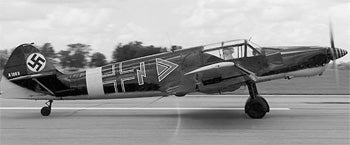
The BF-108 Taifun (Typhoon) is a three-seat cabin monoplane built by the Bayerische Flugzeugwerke. The design by Prof. Willy Messerschmitt in 1933 was the forerunner of the famous BF-109 Messerschmitt fighter that ruled Axis skies during World War II. A few of the all-metal Taifuns were owned by wealthy Europeans before the war, but most of the 885 airplanes built entered service in Luftwaffe training schools. They were also extensively used for liaison and communication missions. After the war, France continued production of the BF-108 (by then Me 108 and Me 208), using the designation of Nord 1000 for the Me 108 and Nord 1100 for the Me 208. Both were fitted with 220-hp Renault engines, and the Me 208 featured a tricycle landing gear.