











 |
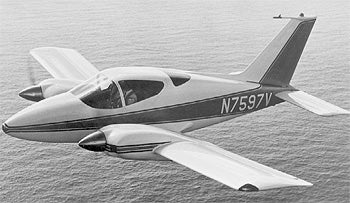
| STANDARD DATA: Seats 2. Gross wt. 3,050. Empty wt. 2,070. Fuel capacity 88. Engines two 160-hp Lycomings. PERFORMANCE: Top mph 232. Cruise mph 219. Stall mph 72. Initial climb rate 1,700. Range 1,160. Ceiling 19,600. Takeoff distance (50′) 1, 180. Landing distance (50′) 2,100. |
The Wing Derringer was powered by twin 160-hp engines driving Hartzell constant-speed full-feathering propellers, and was awarded FAA type certification in 1966. The Derringer made use of unique manufacturing techniques with a patented wing construction utilizing a stretch-formed chemically milled exterior skin. All exterior surfaces were aerodynamically smooth. The Derringer’s wings featured integral fuel tanks. After a delay of many years, it appeared as though the Derringer would reenter production in the early 1980s. The airplane’s target was travelers who usually commuted in pairs. If the Model I had been a success, designer George Wing planned to add turbocharging and then possibly go to a four-place turbofan. Unfortunately, the Derringer never found its way into further production.