












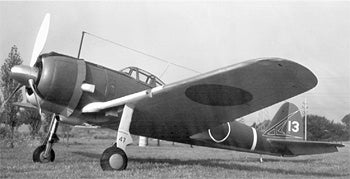
NAKAJIMA “OSCAR”€

1937’€“43

Gemini Sparkle

Key Takeaways:

  • The Japanese Army's single-seat Type I fighter, popularly known as "Haya-busa" and by Americans as "Oscar," featured a streamlined design with tapered wings and inward-retracting landing gear.
  • It was powered by an 1,150-hp Nakajima Type 2 14-cylinder radial engine with a two-speed supercharger, driving a three-blade constant-speed propeller.
  • The fighter achieved a top speed of 333 mph, cruised at 265 mph, and had a range of 1,000 miles.
  • Standard armament included two 12.7mm machine guns in the fuselage, and it featured self-sealing fuel tanks and pilot armor.
See a mistake? Contact us.
STANDARD DATA: Seats 1. Gross wt. 5,500. Empty wt. 1,150-hp Nakajima Type 2. PERFORMANCE: Top mph 333. Cruise mph 265. Range 1,000.

The Japanese Army designation for this single-seat fighter was Type I fighter, Model 2; the popular name was “Haya-busa” meaning peregrine falcon, and the Americans call it “Oscar.” Its wings taper in chord and thickness, and the landing gear retracted inward into recesses in the underside of the wings. The powerplant was one 1,150-hp Nakajima Type 214-cylinder twinrow radial engine. It was fitted with a two-speed supercharger and turned a three-blade constant-speed propeller. The fuel tanks were in the wings, protected by self-sealing rubber. Standard armament was two 12.7mm machine guns in the fuselage that were synchronized to fire through the prop. The pilot sat under a sliding “bubble” canopy and was protected by armor to the rear.

Plane & Pilot

Plane + Pilot is general aviation’s only adventure-based magazine. From where to go, to how to get there, and everything in between, your next great adventure awaits.
Subscribe to Our Newsletter

Get the latest Plane & Pilot Magazine stories delivered directly to your inbox

SUBSCRIBE