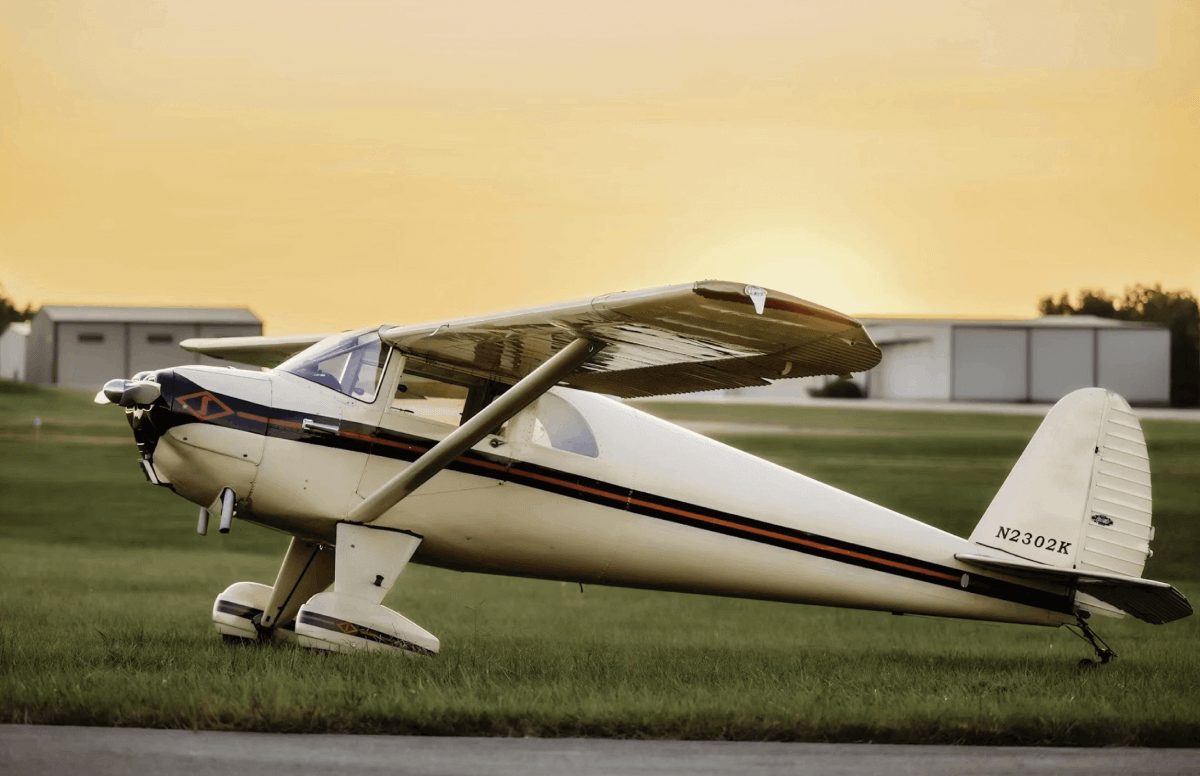











The American Eaglet is a self-launching sailplane designed to eliminate the need for two planes, ground crews, and the requirement to operate out of a regular glider port. Its in-air-restartable engine reduces the need for off-field landings. The wings and inverted-V tailfeathers are built from spruce spars surrounded by urethane foam and covered with precured fiberglass skins. The fuselage is comprised of two preformed fiberglass shells pop-riveted to an aluminum-tube framework and tailboom. The Eaglet’s powerplant is not designed for sustained powered flight. The MC 101 engine and folding propeller are provided for takeoff, in-flight restarts, and climbs only. Fuel tank capacity is five gallons and is generally sufficient for one takeoff and climb to 2,000 feet AGL and three airborne restarts and climbs from 500 feet back up to 2,000 feet.
AmEAGLE “AMERICAN EAGLET”

Key Takeaways:
- The American Eaglet is a self-launching sailplane designed to simplify glider operations by eliminating the need for ground crews, a second plane, and traditional glider ports.
- Its in-air-restartable engine and folding propeller are for takeoff, climbs, and restarts only, not sustained powered flight, significantly reducing the risk of off-field landings.
- The aircraft is constructed with spruce spars, urethane foam, and fiberglass skins for the wings and tail, and a fuselage of fiberglass shells pop-riveted to an aluminum framework.
- A five-gallon fuel tank provides sufficient capacity for one takeoff and climb to 2,000 feet, plus three in-air restarts and climbs from 500 feet back to 2,000 feet.
See a mistake? Contact us.