











Cessna 182 Skylane
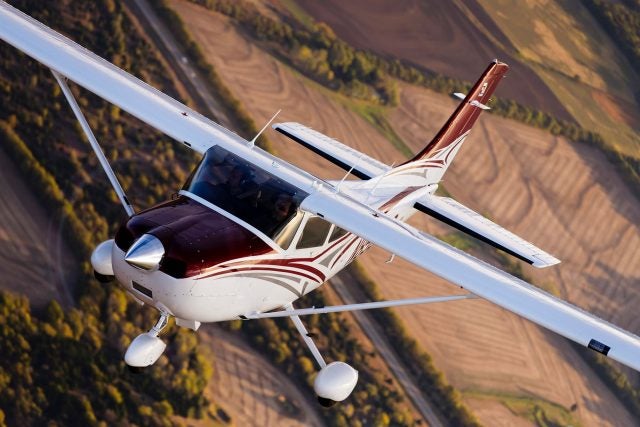
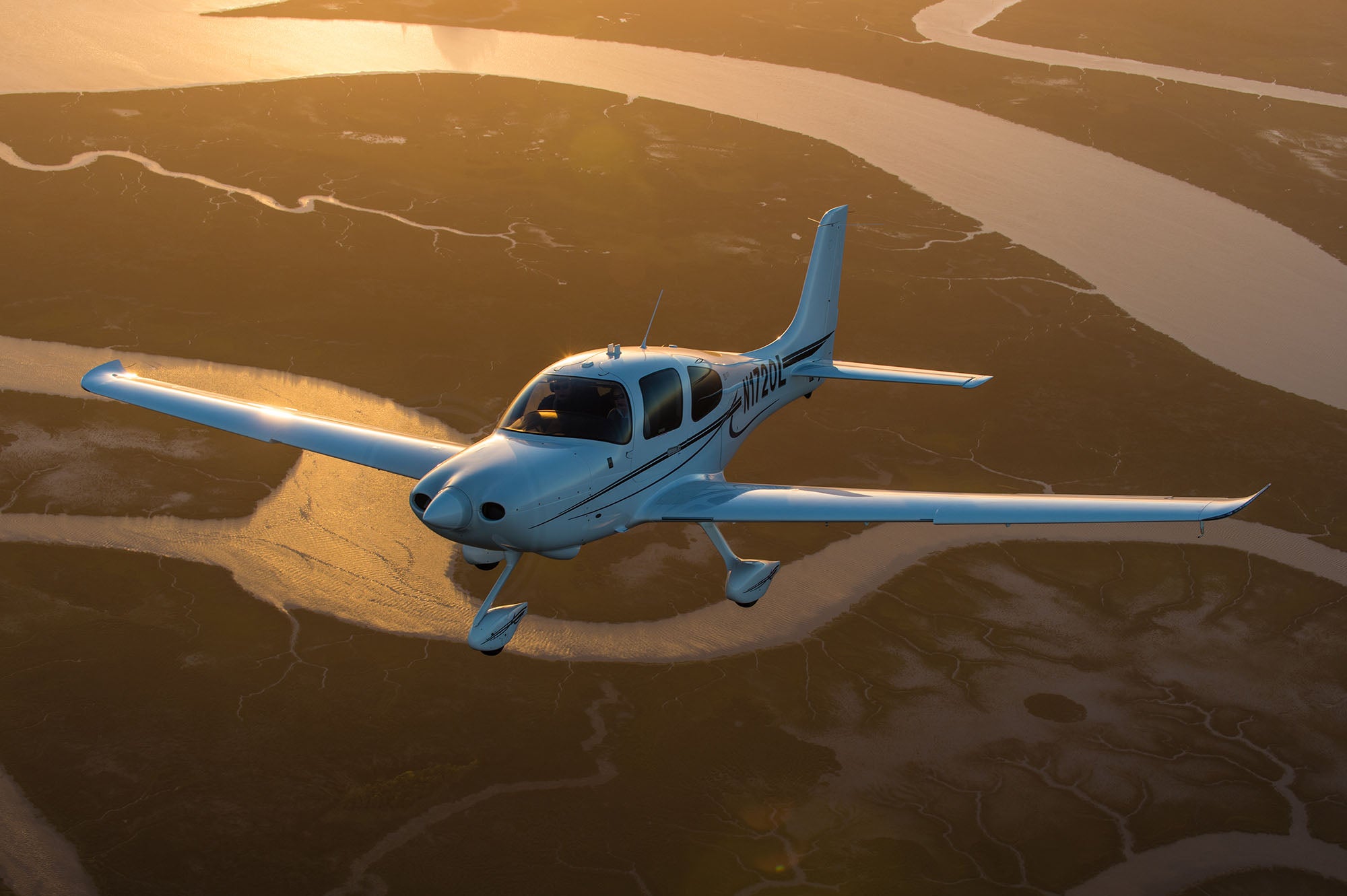
There is perhaps no more iconic four-seater than the Cessna 182 Skylane. With its all-metal, high-wing, fixed-gear configuration, this high-performance single filled a new and extremely attractive niche in the single-engine world when it was handed over to its first customer in 1956. The Skylane was the substantially more powerful step-up model to Cessna’s 172 Skyhawk, which was introduced around the same time. With around 25,000 Skylanes sold, it’s one of the most popular planes ever. There’s good reason for that, too. It’s a capable airplane, one that does everything pretty well, if not spectacularly. And today’s Skylane has added on to that distinction, with better speed, safety and comfort. Today’s Skylane boasts the Lycoming IO-540 rated at 230 hp. The six-cylinder engine swings a three-blade constant-speed McCauley prop. While not blazingly fast, the 182 is a decent cross-country airplane, with enough speed and range to make it possible to connect the dots in style while carrying a big load. With the new Garmin G1000 NXi panel, it boasts impressive avionics with a slew of features.
Niche: Fixed-gear high-performance/utility seater.
Bragging Points: Great useful load, advanced electronics, short- and rough-strip friendly, terrific safety record.
Tradeoffs: Moderate cruise speeds, a bit heavy in pitch handling.
Base Price: $480,000
Competitors: Maule MX-7 235
Fun Fact: Derived from the iconic Cessna 180 taildragger, the 182 went on to inspire several subsequent Cessna classics: the 210, 205, 206 and the 207, as well as the 182RG. The 206 and the 182 are still in production.
Specs
Main Construction: Metal
Engine/HP: Lycoming IO-540-AB1A5/230 hp
Propeller: McCauley, 3-blade, metal, constant speed, 79″ diameter
Avionics: Garmin G1000 NXi
Top Cruise Speed: 145 kts
Stall, Landing Configuration: 49 kts
Max Range: 915 nm
Max Takeoff Weight: 3,100 lbs.
Payload (full fuel): 623 lbs.
Useful Load: 1,145 lbs.
Takeoff/Landing Distance: 1,514 ft./1,350 ft.
Cirrus SR20
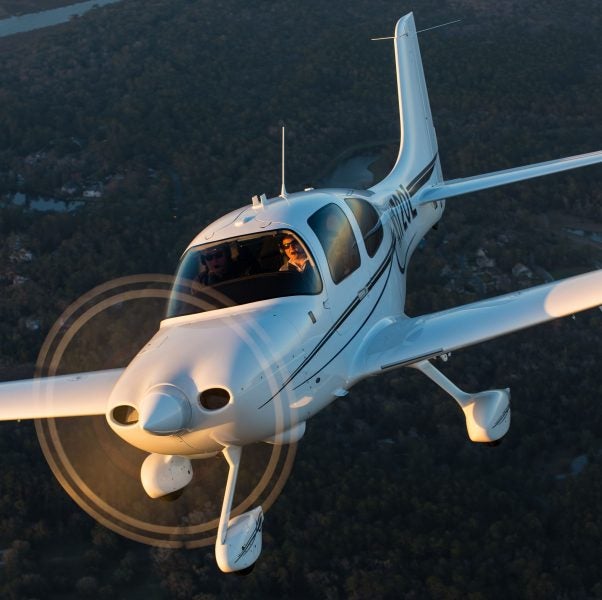
While not as popular as its more famous hangar mate the SR22, the Cirrus SR20 is pretty much the same airplane with less power and no turbo option. While Cirrus has sold a substantial number of SR20s as training aircraft, its competition in that arena is stiff, and it has never gained a lot of traction there. In 2017, the SR20 got a new engine when Cirrus swapped out the original Continental IO-360 210-hp six-cylinder model for a 215 hp Lycoming IO-390 four-cylinder engine. At the same time, the SR20 got a boost in useful load of 150 lbs. The rest of its performance remained close to its previous marks. The SR20’s cruise speed of 155 knots makes it a good cross-country plane. While its short-field performance isn’t close to that of the Cessna 182, it still doesn’t need a lot of runway to do its thing. In most other regards, the SR20 is a compelling product. Like the SR22, it boasts a whole-airplane recovery parachute system, the excellent Perspective+ avionics system by Garmin, ESP envelope protection and ADS-B In and Out, all on top of a beautiful design with great creature comforts.
Niche: Mid-performance, fixed-gear (four-five seats) personal transportation/training aircraft
Bragging Points: A whole-airplane parachute, the same cabin, windows and available air- conditioning as the SR22, strong performance and good useful load.
Tradeoffs: There’s no turbocharged version.
Base Price: $389,900
Competitors: Diamond DA40 XLT, Cessna Skylane
Fun Fact: Cirrus has built more than 1,500 SR20s since the plane’s introduction in 1999.
Specs
Main Construction: Composite
Engine/HP: Lycoming IO-390-C3B6/215 hp
Propeller: Hartzell, 3-blade, composite, constant speed, 74″ diameter
Avionics: Cirrus Perspective+ By Garmin (Garmin G1000 NXi)
Top Cruise Speed: 155 kts
Stall, Landing Configuration: 60 kts
Max Range: 672 nm
Max Takeoff Weight: 3,150 lbs.
Payload (full fuel): 704 lbs.
Useful Load: 1,030 lbs.
Takeoff/Landing Distance: 1,685 ft./853 ft. (groundroll)
Diamond DA40 XLT
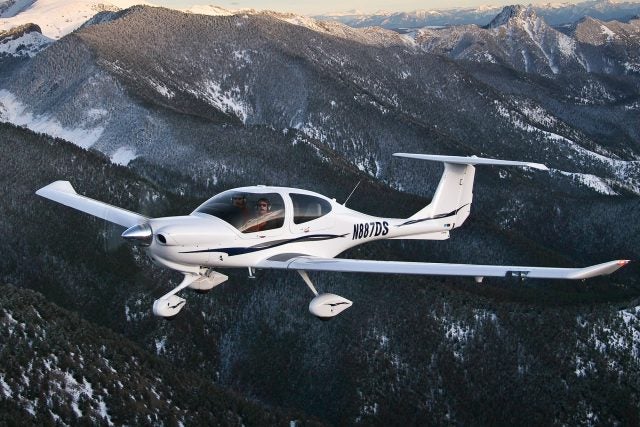
If you’re a bit confused by the various Diamond DA40 models, you can be forgiven. There have been around 10 versions, though the basic airframe configuration hasn’t changed much—which is a good thing. The XLT is the latest piston model and the most direct descendant of the original DA40, which set itself apart with a long, sailplane-like wing, sticks instead of yokes and an unusual door arrangement that includes a pilot’s-side rear gullwing hatch for loading one or both rear-seat passengers. The all-composite DA40 climbs well, and with its 145-knot cruise speed, it’s competitively fast. Like nearly every plane in this lineup, it’s outfitted with the Garmin G1000 NXi. It’s a good cross-country and IFR machine and, importantly, it boasts one of the best safety records in the segment. Plus, its 600-pound full-fuel payload offers pilots good loading options.
Niche: Personal/flight training
Bragging Points: Good full-fuel payload, safe and reliable, strong composite construction, unsurpassed visibility.
Tradeoffs: Moderate cruise speed, average performance, warm interior on sunny days.
Base Price: $389,800; $459,800
Competitors: Cirrus SR20, Tecnam P2010
Fun Fact: Diamond started in aircraft manufacturing building sailplanes (still does), and that heritage is evident in the long slender wings of Diamond aircraft.
Specs
Main Construction: Composite
Engine/HP: Lycoming IO-360-M1A/180 hp
Propeller: Hartzell or MT 3-blade constant speed, 74″ diameter
Avionics: Garmin G1000 NXi
Top Cruise Speed: 137 kts; 154 kts
Stall, Landing Configuration: 58 kts
Max Range: 830 nm (no reserve); 984 nm (no reserve)
Max Takeoff Weight: 2,646 lbs.; 2,888 lbs.
Payload (full fuel): 600 lbs.; 277 lbs.
Useful Load: 900 lbs.; 950 lbs.
Takeoff/Landing Distance: 1,450 ft./2,100 ft. (MTOW—50 ft. obstacle); 1,302 ft./1,043 ft. (MTOW—50 ft. obstacle)
DA40NG/Tundra
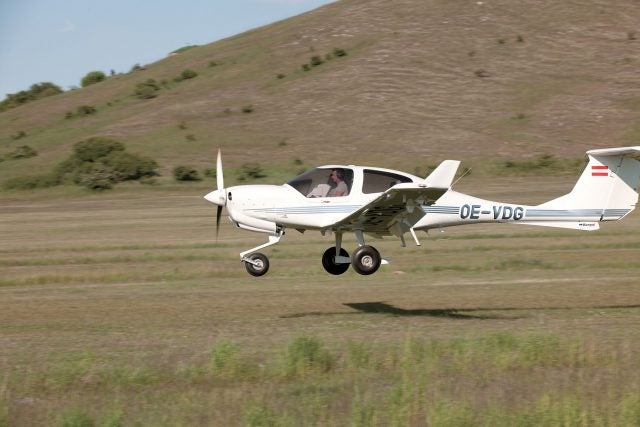
Diamond offers a couple of diesel-powered versions of the DA40: the Jet-A-burning NG and the backcountry-ready Tundra.
The DA40NG might be the DA40 model that goes the distance. Outfitted with wingtips and a slightly shorter wing—for an easier fit into standard hangars—and an Austro turbodiesel engine, the NG offers performance and economy that’s better than that of the gas piston model in most respects. With a fuel flow at max continuous power of around 8.5 gph and an economy fuel burn of around 5 gph at 10,000 feet, where it still makes full-rated power, the NG can do better than 150 knots and fly for nearly a thousand miles. For shorter hops, which statistically, most missions will be, it can do nearly 160 knots while sipping at the Jet A.
Another DA40 model, the Tundra is also Austro-diesel powered. It’s outfitted with beefed-up gear and big tires; who needs wheel pants? Designed for rough-field operations, the Tundra still gives its owners a comfy and beautiful interior and flat-panel avionics goodness even if its exterior looks the rugged part.
Niche: Personal transportation.
Bragging Points: FADEC. Great fuel efficiency even at top cruise speeds. Fuel available worldwide. Climbs great. Terrific visibility. Top-notch avionics.
Tradeoffs: Moderate cruise speed, average performance, warm interior on sunny days.
Base Price: $389,800
Price Typically Equipped: $495,000
Competitors: Cirrus SR20/Cessna 182
Fun Fact: Diamond North America is now owned by Wanfeng Auto Holding Group, a Chinese company. Diamond’s subsidiary company makes the Austro diesel engines that power several Diamond models.
Specs
Main Construction: Composite
Engine/HP: Austro AE300/168 hp
Propeller: MT 3-blade, constant-speed, composite
Avionics: Garmin G1000 NXi
Top Cruise Speed: 155 kts
Stall, Landing Configuration: 49 kts
Max Range: 984 nm (no reserve)
Max Takeoff Weight: 2,888 lbs.
Payload (full fuel): 675 lbs.
Useful Load: 950 lbs.
Takeoff/Landing Distance: 1,936 ft./2,133 ft. (MTOW—50 ft. obstacle)
Tecnam P2010 P Twenty-Ten/ P2010 MkII
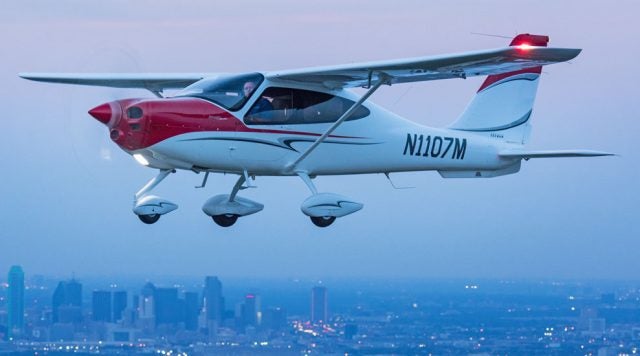
The Tecnam P2010 is one of the prettiest planes in this lineup, or in any lineup, really. A four-seat, fixed-gear general-purpose single, the P2010 features a design with a mix of materials. The fuselage is of carbon fiber for great aerodynamics and smooth lines, and the wings are made of metal in the conventional Cessna/Piper way. With great ramp presence, terrific cabin size, the best high-wing visibility in its class, good load-carrying capacity and a good selection of instrument panel options, including Garmin G1000NXi, the P2010 has a lot to offer. And unlike most competing models, it gives its prospective owners a lot of choice in the matter. To whit, the P2010 MkII is outfitted with a 215 hp Lycoming IO-390 four-cylinder fuel-injected engine. The boost in power over the Lycoming IO-360 in the standard model increases the climb rate while keeping the plane right around its 600 nm range. Added together, those numbers, along with the P2010’s excellent useful load of better than 900 pounds, make the P2010 a competitor more of the Cessna 182 than the 172.
Niche: High-performance utility/transportation plane
Bragging Points: Great ramp appeal, roomy interior, a third door, good fuel efficiency. Choice of powerplants and avionics.
Tradeoffs: Few P2010s in the field and limited North American presence.
Base Price: $383,000/$403,500
Competitors: Cessna 182; Diamond DA40
Fun Fact: The way you pronounce the name of the plane is an alternate name Tecnam sometimes uses: “P TwentyTen,” not “P Two-Thousand and Ten.”
Specs P2010; P2010 MkII
Main Construction: Composite fuselage, metal wings
Engine/HP: Lycoming IO-360-M1A/180 hp; Lycoming IO-390-C3B6/215 hp
Propeller: MT, 2-blade, composite or metal, fixed pitch or constant speed, 74″ or 76″ diameter; MT, 2-blade, composite, constant speed, 72″ diameter
Avionics: Garmin G500 through G1000NXi
Top Cruise Speed: 134 kts (fixed pitch prop)/137 kts (constant speed prop); 146 kts
Stall, Landing Configuration: 52 kts; 52 kts
Max Range: 591 nm (fixed pitch prop)/600 nm (constant speed prop); 597 nm
Max Takeoff Weight: 2,557 lbs.; 2,557 lbs.
Payload (full fuel): 546 lbs.; 490 lbs.
Useful Load: 925 lbs.; 871 lbs.
Takeoff/Landing Distance: 2,054 ft./1,709 ft. (fixed pitch prop); 1,952 ft./1,709 ft. (constant speed prop); 1,640 ft./1,709 ft.