










In this day and age of never-ending distractions, jam-packed calendars, and the world at our literal fingertips, it can feel almost impossible to catch a break, step away, and recharge.
As pilots, we have a certain luxury that many do not—to escape the confines of earth for fleeting moments of peace and disconnection.
Although we may feel disconnected from the world below, there is a special connection that replaces our worldly one—the bond between human and machine.
If you know what I’m talking about, congratulations. Consider yourself to be in the rarer class of today’s modern pilot. Rather than acting as an operator, you find joy in the romance of feeling one with your aircraft, understanding its every nuance and taking great pride and care in the machine that propels you through the sky.
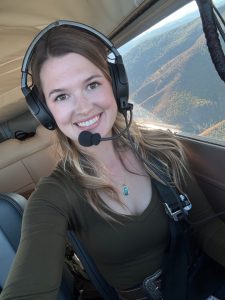
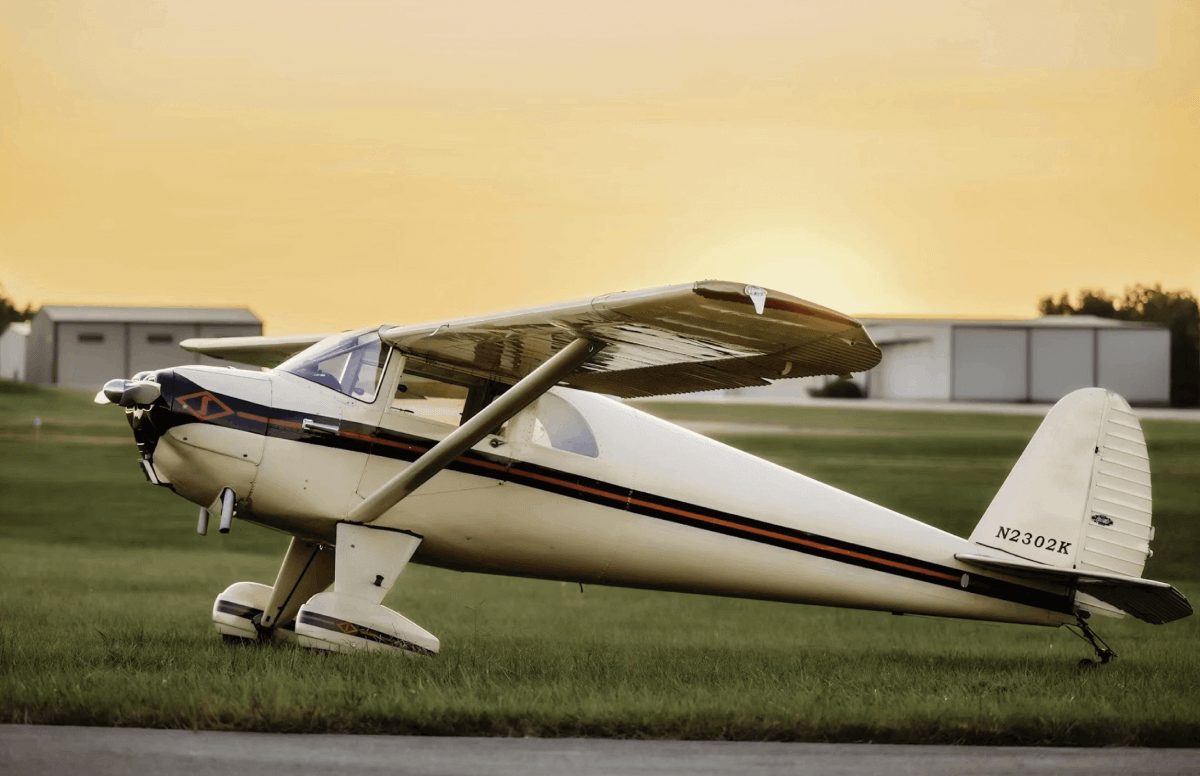
After 800 hours of flying, with almost 50 different types in my logbook, there are several airplanes that I have felt one with—Game Aerospace’s GB1 GameBird, almost any member of the classic and modern day Cub species, and a very specific Cessna 170, just to name a few.

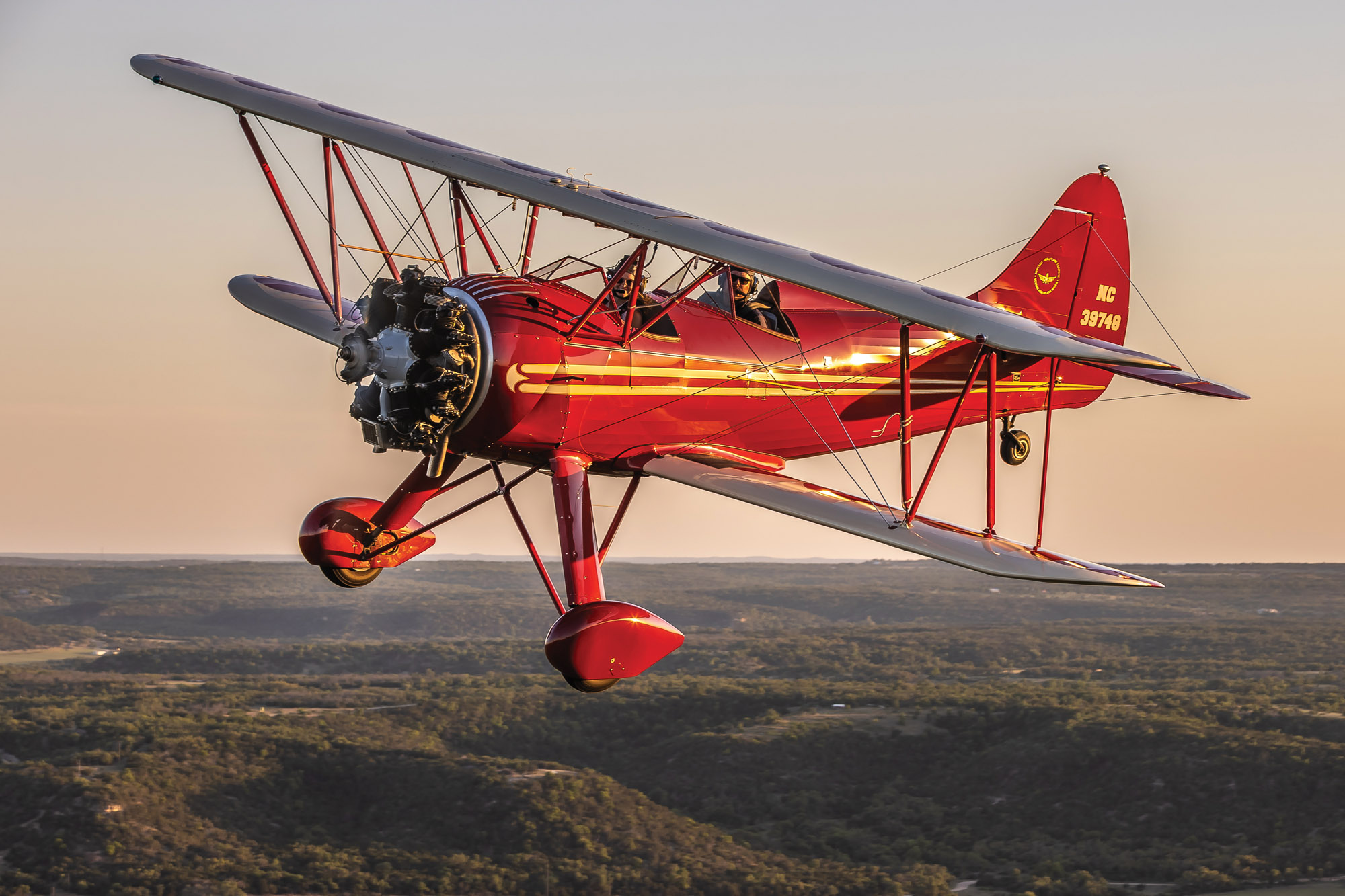
But there is only one airplane that has disconnected me from the ways of the world, yet reconnected me with my inner child in ways that I had yet to experience—a WACO UPF-7.
Manufactured by the WACO Aircraft Co. in 1942, this particular red biplane is owned and operated by TacAero in Fredericksburg, Texas. NC39748 was one of 600 UPF-7s to roll off WACO’s assembly line in Troy, Ohio. Originally built to train pilots for World War II, the company lost the official training contract to the Boeing PT-17 Stearman.
“From what I was told, the Army didn’t like the WACO because it flew too nicely,” said Kris Finkbeiner, my WACO instructor at TacAero. “So this airplane ended up going to Texas A&M [University] to serve in the civilian training program.”
Powered by a 220 hp Continental W-670 radial engine, the WACO might look intimidating, but “it’s just a big Cub,” according to Finkbeiner. “The suspension is soft, and it has an oil-and-spring, Champ-like gear.”
TacAero, a modern tailwheel training facility located an hour north of San Antonio, offers a multitude of checkouts in aircraft ranging from highly equipped Carbon Cubs and GameBirds, to ScaleWings’ scaled-down P-51 Mustangs.
So how does an old biplane fit into TacoAero’s training model?
“Well, we wanted to go down the rabbit hole of giving people the opportunity to learn to fly this aircraft and give rides in it,” said Finkbeiner. “It has two seats in the front, so it does work better than the Stearman to give rides. We do training for Rare Aircraft customers as well. This is a big deal for insurance requirements.”

Finkbeiner, who is clearly smitten with the WACO, isn’t afraid to also be realistic about the challenges of the vintage biplane.
“It’s a classic, but they don’t do a whole lot of anything particularly well,” he said. “They’re underpowered, they’re heavy, hard to land, hard to see out of, but this history and the nostalgia is so cool. I love to think about the pilots that were training in it back in the day.”
Although this would be my first time flying a WACO from the back seat, I wasn’t new to old radial biplanes where “flying blind” is the status quo. However, it was definitely a point well worth covering ahead of strapping in.
“So how were you taught to not see stuff in front of you?” asked Finkbeiner.
“Well, it was a combination of just doing it and learning to use my peripheral vision to judge my relative location on the runway and height above the ground,” I replied.
Since we weren’t exactly starting from the ground up, my checkout skipped a vital step that almost all other UPF-7 students enrolled in TacAero’s WACO program go through.
“We typically start biplane students in the back seat of the Super Cubs to replicate the blindness,” said Finkbeiner. “It teaches you to fly by feel rather than by looking at gauges. The big thing is getting people to realize what they can see. It’s just amazing how people with thousands of hours and plenty of tailwheel time get in this airplane, and they get really panicky.”
After a walkaround, Finkbeiner invited me to climb into the aft pilot’s seat.
“I don’t have a few things up front that are needed to start the airplane, so that’s all on you, as will everything else,” he said. “Let’s walk through it real quick. You’ll crack the throttle, push the mixture full forward, turn the master on, two shots of prime, [and] push the starter with your foot…”
“Wait, with my foot? Where the heck is it?” I asked as I scoured the cockpit.
“It’s hiding down by your right foot in the center stack under the radio,” Finkbeiner said.
“Wow, If it was a snake it would have bitten me,” I replied.

“Yeah, everybody misses it,” Finkbeiner said. “Once you get it cranking, count four blades then turn the mags to both.”
With that brief, yet sufficient back-seat checkout, Finkbeiner climbed up front. After he was strapped in, he exclaimed, “Ready when you are,” after once again reminding me of the starting sequence.
“Clear prop,” I said after completing the first half of the starting procedure. With my foot on the starter, the old radial whined its way to life, and after the fourth blade passed my eye, I turned the mags to both.
With oil pressure rising, I allowed myself to sit back and take it all in, as the smoky Continental idled around 1,000 rpm. This truly was a dream come true.
“Make sure your tailwheel is unlocked for taxi, and then do a little brake check,” said Finkbeiner, transmitting through a WWII-type soft-shell helmet and accompanying David Clark headset.
As my left hand added a touch of power, the 1,988-pound biplane slowly but surely rolled forward. Noting the tailwheel was indeed unlocked, I moved my foot to the top of the rudder pedals to ensure the brakes were operating as normal.

“Good to go,” I said to Finkbeiner as the biplane rolled to a stop. “But, wow, this thing is so blind,” I said as I immediately began to S-turn my way toward the taxiway.
For those unfamiliar with the practice of S-turning, it is a combination of using the rudder pedals to quite literally form the shape of an “S” on the ground in order to peer in front of the airplane’s nose.
For instance, as right rudder is applied, the pilot glances off the left side of the nose while taxiing to look for any and all obstructions. The process is then repeated with left rudder and a right glance. It is the only way that blind taildraggers can move around on the ground safely.
Once we reached the run-up area, I performed a left-to-right flow before conducting my run-up. After ensuring the fuel was on both, mixture was full rich, primer in and locked, mags were on both, and that the tailwheel was unlocked, I brought the throttle up to 1,500 rpm. With appropriate mag and carb heat checks, Finkbeiner instructed me to perform a control check.
Moving the stick from left to right, forward, and aft, I noticed the far range of movement. It was a far cry from the sharp and snappier aileron movements I was used to.

After taking one last look at my trim, fuel, and mixture I pushed the power forward and S-turned my way toward the runway.
“Holy cow, this is so cool,” I said with a massive smile on my face. “I can’t believe I’m actually getting to do this.”
As I lined up on centerline, I reached to the right side of the cockpit to push then pull on the tailwheel locking mechanism, which is quite simply, a long black twisting rod. Failure to lock the tailwheel prior to departure can lead to quite the fight in order to maintain directional control.
“Go ahead and release the brakes, let it come forward just a touch, and grab a brake,” Finkbeiner said.
As I did just that, there was no wondering as to whether or not the tailwheel was locked.
“It’s not going anywhere,” Finkbeiner said. “Remember, this is just like any other tailwheel takeoff. Stick neutral, bring the throttle up smoothly, watch the edge of the runway with your peripheral vision, and as that tail comes up, you’ll get a little more visibility. Just keep it in the center of the runway.”
With another big grin on my face, I slowly applied full power and intently kept my eyes glued on the left side of the runway. Before I knew it, the tail was ready to come up, so I pushed the stick forward. Although I was expecting to have a touch more visibility, my 5-foot-4 frame was still flying blind, even with the tail suspended in the air.
Already feeling like I was in a big open-air Cub, I pulled back on the stick and rotated. If you’re wondering at what speed that occurred, TacAero’s checklist dictates that rotation starts at 60 mph. However, the last thing I was looking at that moment was the airspeed indicator. The airplane felt like a natural extension of my body, so I kept my eyes on the left side of the runway and rotated when the airplane felt ready.
“Very nice,” Finkbeiner said. “Absolutely beautiful takeoff.”
“Thanks,” I replied. “I wasn’t expecting her to want to fly so quickly.”
Finkbeiner was taking note of the slight movement of the flying wires.
“Lower the nose just a tad to build that airspeed, and the wires will stop that little wobble,” he said.
The instant I pointed the nose ever so slightly toward the ground, the wires stopped vibrating, and we were on our way.
I was in complete shock and awe in the best possible way as we slowly gained altitude. Although we had only been airborne for less than a few minutes, I could already feel the muscles in my face tiring from the most authentic grins I had felt in a long time.

As I turned away from the airport, I immediately noticed how easily the airplane stayed coordinated. Unlike a few other taildraggers I had recently flown, there was hardly any work involved in keeping the ball centered.
“I just can’t believe how graceful and natural this airplane feels,” I said.
“Yeah, as far as flying characteristics are concerned, you really can’t beat this airplane,” he replied.
Although I now had slightly more visibility in the air as compared to on the ground, it was still impossible to see directly off the nose.
“There are a few towers that we should be clear of out here,” said Finkbeiner. “But just in case, start doing some S-turns so we can get a good look.”
As I ensured we were clear of any obstacles, I couldn’t help but feel connected to the barnstormers and aviators of the past. From the sounds and smells of the radial engine, to the specks of oil on my windscreen and arms, the nostalgia and history was undeniable and far more evident than any other airplane I had piloted before.
Finkbeiner and I had big plans for this flight, but Mother Nature had another idea. Although we were expecting the ceilings to lift, we were only able to climb to 1,300 feet agl before running out of proper cloud clearance.
“This certainly isn’t enough room for stalls,” I said.
“Yeah, I agree,” he replied. “Well, just know she stalls really nicely. There’s a nice buffet and drop. It doesn’t really want to drop a wing, as long as you keep it coordinated. If you don’t, it definitely will drop a wing, but overall it’s very docile.”

After a big loop around Fredericksburg and a few steep turns and wingovers in what truly felt like a hefty Cub, the rain started to come down.
“Well, I don’t feel like getting soaked…what about you?” I asked Finkbeiner.
“Yeah, agreed,” he replied. “Let’s go get some takeoffs and landings in before we can’t.”
Taking that as my cue, I pointed the airplane back toward Fredericksburg’s Gillespie County Airport (T82) and entered an overhead midfield, right downwind for the grass running parallel with the pavement.
“Would you like to do an inspection pass of sorts to get a visual idea of what the sight picture and tall gear is going to look like before doing an actual landing?” asked Finkbeiner.
“Yeah, that sounds like a good idea,” I replied.

“Perfect,” said Finkbeiner. “That way you can get down there and close, feel where everything is at, then we will go around and land.”
As I got squared away in the downwind, I couldn’t help but notice how comfortable and right at home I felt in the cockpit. Unlike the WACO’s Boeing-made counterpart, I was able to reach anything and everything with such ease and precision, particularly the carb heat.
“This doesn’t remind me of the Stearman at all,” I said. “I have always felt so out of place in the Stearman, and this nice big windscreen makes such a difference.”
“Yeah, it is so much different,” said Finkbeiner. “It really holds you in place. You feel so exposed in the Stearman.”
Abeam the numbers in the downwind, I pulled the power and began a rounding base to final turn in order to see the runway for as long as possible.
“Gosh, this thing drops like a rock,” I said.
“Sure does,” he said. “Go ahead and turn that carb heat off.”
Abeam the pavement numbers Finkbeiner noted “looks like you’re on centerline to me…just keep that up,” as I kept the power steady and flew the airplane 10-15 feet above the ground. With nothing to guide me but my left side peripheral vision, I enjoyed every second of the instructional “low pass” of sorts.
“How are you feeling?” Finkbeiner asked. “Are you seeing the sight picture?”
“Oh, yes,” I replied. “I’m feeling really good. It’s so Cub-like in so many ways.”
About halfway down the runway, I slowly applied full power and announced we were on the move.
“That looked really good,” Finkbeiner said. “Give yourself a little more height on downwind and just a touch more room in the arcing base to final turn, and you’ll be good to go. I felt like you had good peripheral visibility, and you were tracking just fine.”
As I turned downwind, it once again sank in just how lucky I was.
“I have flown some cool airplanes and helicopters in this pattern,” I said. “A GameBird, Carbon Cubs, an R66, and now a WACO. I’ve loved them all for different reasons, but I think this airplane might be my favorite.”
“Mine too,” Finkbeiner replied.
As I pushed the carb heat forward, I began my arcing base to final turn. Feeling confident and excited for my first WACO landing, I remained a combination of loose and lighthearted, yet focused and dialed in.
“Red biplane, final for the grass, Runway 14, Gillespie,” I announced over frequency.
“I’ll be here if you need me, but I’m going to stay away from the controls,” said Finkbeiner.
“All right, I’m feeling good, but I felt a little sink,” I said. “I’m going to add a blip of power.”
“Absolutely, I like it,” said Finkbeiner. “You’ve got a nice headwind, but it’s pretty much down the runway. You’re tracking nice and straight—keep it up.”

As I pulled the power to completely idle at the start of the runway, I slowly and instinctively began my flare.
“Hold it there for just a second,” said Finkbeiner. “Those wheels are going to touch any second. This is going to be beautiful.”
Keeping my eyes glued on the left side of the runway, I felt that sweet spot that every pilot dreams of—being one with my machine, in the most harmonious of ways as I felt the UPF-7 roll onto the Hill Country grass in a textbook, three-point landing. To say I was grinning from ear to ear would be an understatement.
“Holy cow, I’m so happy,” I said to Finkbeiner.
“That was so gorgeous, Cayla,” he replied as we both laughed and celebrated through our headsets.
I let the biplane roll down toward the second taxiway, not even to the halfway point of the runway.
“Start slowing her down with just a slight touch of the brakes, and let’s get ready to unlock the tailwheel,” Finkbeiner said. “Just push forward on it, but make sure to keep the airplane rolling to help get it unlocked.”
With the tailwheel unlocked, we made our way to the taxiway, and with the skies clearing, we headed out for a few more laps around the pattern.
Thanks to Finkbeiner’s instruction and the graceful nature of the vintage biplane, I felt more and more of an aviator with every landing. Although I might have been born several decades after the realest and truest of barnstormers, the WACO connected me to pilots of the past in ways I have quite simply never felt before.
Whether you’re a pilot with a fresh tailwheel endorsement or someone that has spent thousands of hours dragging tail, TacAero’s UPF-7 checkout is designed to be enjoyed by almost anyone. And that’s especially true if you’re someone who craves an interconnected, soulful experience with aviation.

Complete with old school energy, freedom, and trust, the experience of learning to fly the WACO UPF-7 is a symbiotic one. Similar to the feeling of driving a stick-shift car versus an automatic, the WACO will not do the work for you.
But if you understand the intricacies of the machine, you’re bound to embrace pure peace, nostalgia, and connection like never before.