









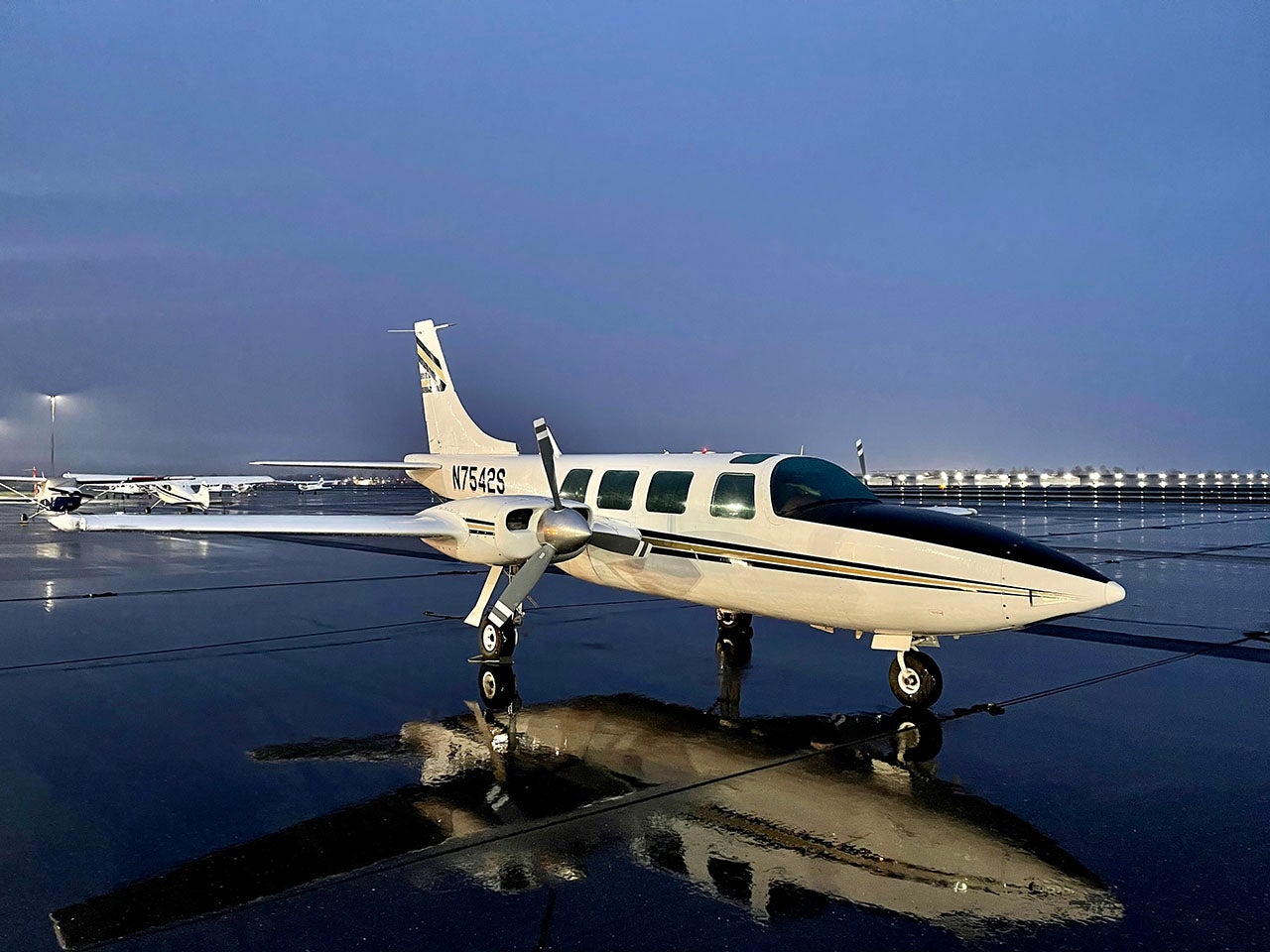

After visionary aircraft designer Ted Smith originated the Aero Commander, he went on to create the Aerostar twin line. He envisioned Aerostar models from a single to a jet, all based on his mid-wing speedster. First appearing in 1969 as the Aerostar 600 and turbocharged 601, the airplanes went through multiple ownerships over 15 years of production, including Mooney and Piper.
If you want to fly fast and high, an Aerostar is probably the ultimate answer to your needs. The most popular models, the 601P, 602P and 700P, are pressurized to take advantage of the design’s potential. It’s a stout, well-built airframe, seating six and using the Lycoming IO-540 series of a nominal 290-hp (the 700P had 350-hp engines). Capable of 260 knots (300 mph) up high, an Aerostar easily tops 220 knots at medium altitudes.
After Piper Aircraft ended Aerostar production in 1984, parts and technical support shifted to Aerostar Aircraft in Idaho, and there is an active owner’s group to share experiences. Maintenance requires specific knowledge and familiarity with the design, as Aerostars are compact and crowded to work on.