








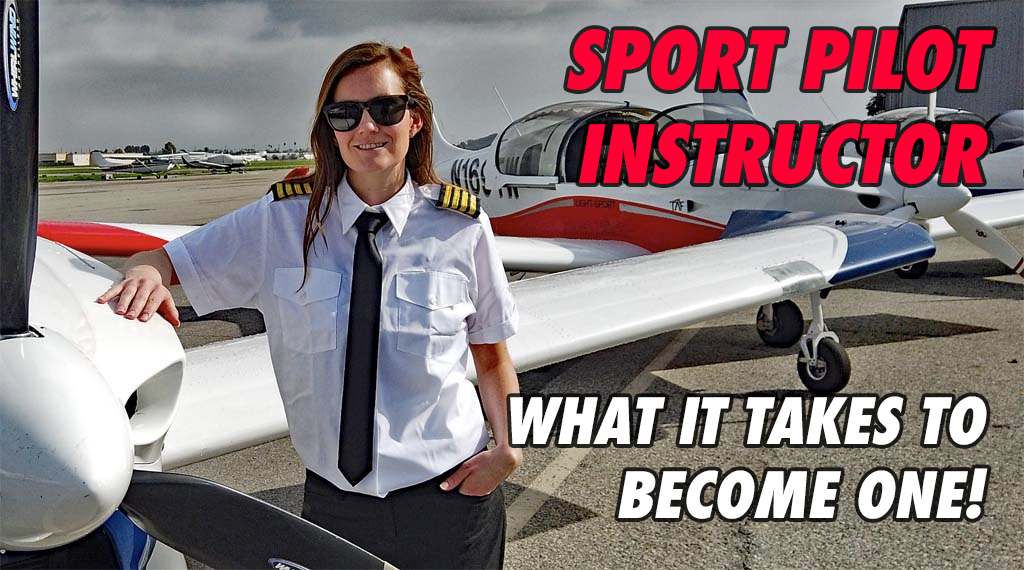

 The journey to becoming a professional pilot has traditionally been a long and expensive one, requiring hundreds of flight hours and multiple certifications before being able to earn money. However, the FAA Sport Pilot Instructor Certificate (CFI-S) offers a potential shortcut for aspiring aviators, allowing them to start teaching and earning income with significantly fewer hours than a traditional Certified Flight Instructor (CFI).
Steps to Becoming a Sport Pilot CFI
- Private Pilot Certificate: This is the foundation for all pilot certifications. You’ll learn basic flight maneuvers, navigation, and safety procedures. A Sport Pilot Certificate will be sufficient if you do not aspire to larger standard category aircraft, or simply wish to obtain your Private Pilot Certificate at a later date.
- Instrument Rating: This rating allows you to fly in instrument meteorological conditions (IMC), relying on instruments rather than visual references. It’s a crucial step toward becoming a professional pilot and will be required for flight instruction in standard category aircraft as a traditional CFI. While not required for Sport Pilot Instructors, this training is highly recommended. While nothing prevents a Sport Pilot Certificate holder from obtaining instrument training, as of the time of writing, you must have a Private Pilot Certificate or higher to obtain your Instrument Pilot Certificate.
- Sport Pilot CFI: Once you have your Sport Pilot or Private Pilot Certificate, and optionally Instrument Rating, you can pursue the Sport Pilot CFI. The minimum total time requirement is only 150 hours, compared to 250 hours for a traditional CFI. This means you could potentially start instructing and earning income much sooner.
Advantages of the Sport Pilot CFI Pathway
- Faster entry into paid instruction: The lower flight hour requirement allows you to start earning money sooner, helping to offset the cost of further training and certifications.
- No Instrument or Commercial Pilot Certificate required: Unlike traditional CFIs, you don’t need an Instrument or Commercial Pilot Certificate to become a Sport Pilot CFI.
- Valuable experience: Flight instruction is an excellent way to build flight hours and experience while getting paid. It also helps develop essential communication and teaching skills.
- Continuing the Journey to a Professional Pilot Career
After earning your Sport Pilot CFI, you’ll continue working toward your ultimate goal of becoming a professional pilot. This typically involves the following steps:
- Instrument Pilot Certificate: This rating allows you to fly in instrument meteorological conditions (IMC), relying on instruments rather than visual references.
- Commercial Pilot Certificate: This certificate allows you to fly for hire.
- Certified Flight Instructor (CFI): With this certificate, you can instruct in standard category aircraft.
- Certified Flight Instructor Instrument (CFII): This allows you to provide instrument flight instruction in standard category aircraft.
- Multi Engine (Flight) Instructor (MEI): This allows you to provide instrument flight instruction in standard category aircraft.
- Airline Transport Pilot (ATP): Required for airline operations such as Part 121 carriers (American, United, Delta, etc.), and most Part 135 carriers. While exceptions exist for certain Part 135 carriers, that’s beyond the scope of this article.
Conclusion
The Sport Pilot CFI pathway offers a unique opportunity for aspiring aviators to accelerate their journey to a professional pilot career. By starting to instruct with fewer flight hours, you can gain valuable experience, earn income, and build hours towards further certifications. While it’s not the traditional route, it’s a viable option for those seeking a faster and more affordable path to a paid flying career.