










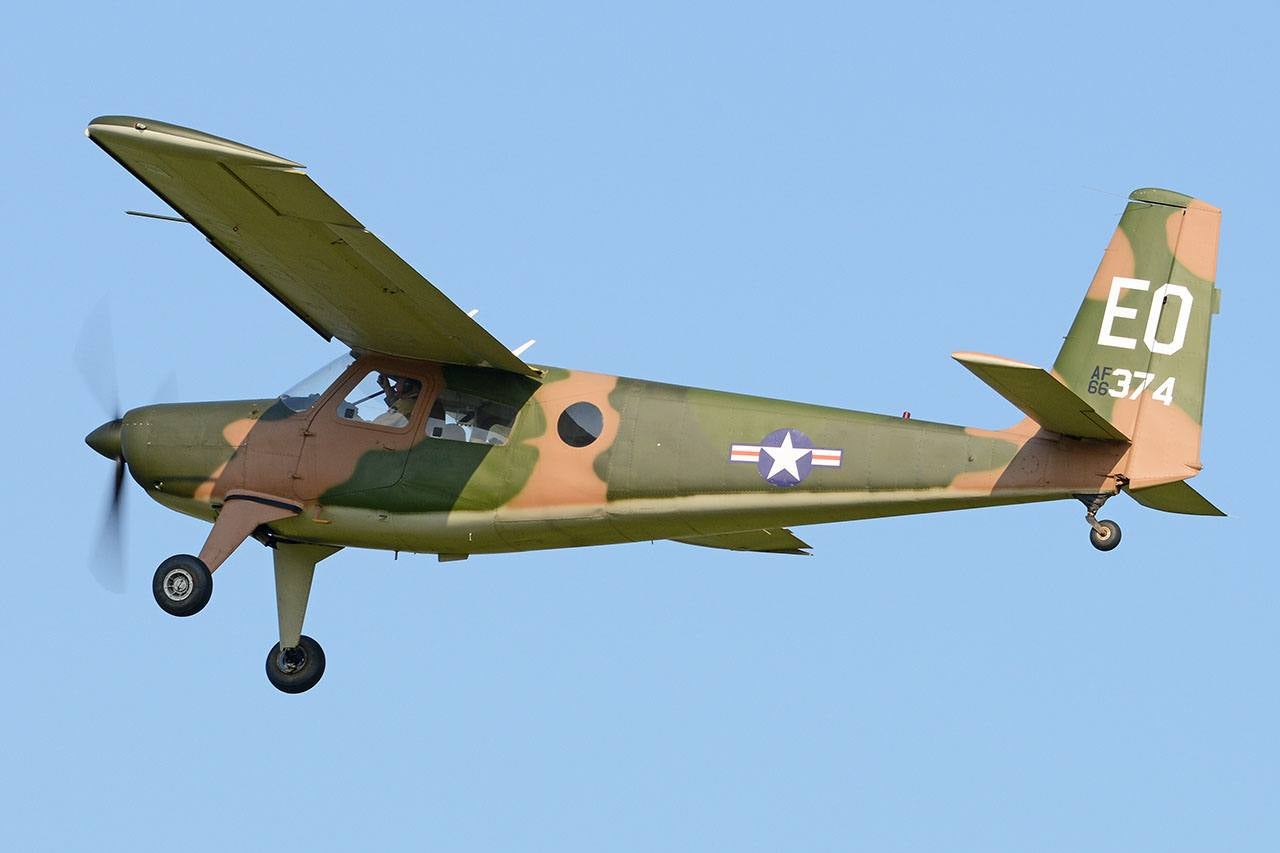
The Helio Courier, manufactured in Kansas starting in the mid-1950s, was and still kind of is an odd bird. With its almost comically long wheelbase (all the better to brake without nosing over), high-rise tail and droopy-eyed leading edges, the model looks like the product of a design-by-committee project. The tall vertical tail notwithstanding, the thing about the Courier is the wing, and it is an exceptional piece of engineering. It features full-span leading-edge slats that stay somewhat flush with the leading edge at speeds of around 55 mph and extend at slower speeds, offering greatly enhanced handling even at very slow airspeeds, down below 30 mph, in fact, and with positive handling control throughout that range. The three-quarter-span full Fowler flaps are also things of beauty. And while the Courier looks like a heavyweight, its 3,000-pound max weight is very modest, allowing it an impressive payload. The Achilles heel of the Courier, like a number of other Kansas designs of the day, was the geared engine the company selected for it, which saddled owners with poor reliability.
Helio Courier, 1954

Key Takeaways:
- The Helio Courier, a distinctive aircraft from the mid-1950s, is celebrated for its exceptional wing design, featuring full-span leading-edge slats and Fowler flaps that enable stable handling at speeds below 30 mph.
- Despite its unusual appearance and modest 3,000-pound maximum weight, the Courier offers an impressive payload capacity.
- The aircraft's main drawback was the poor reliability of its selected geared engine.
See a mistake? Contact us.