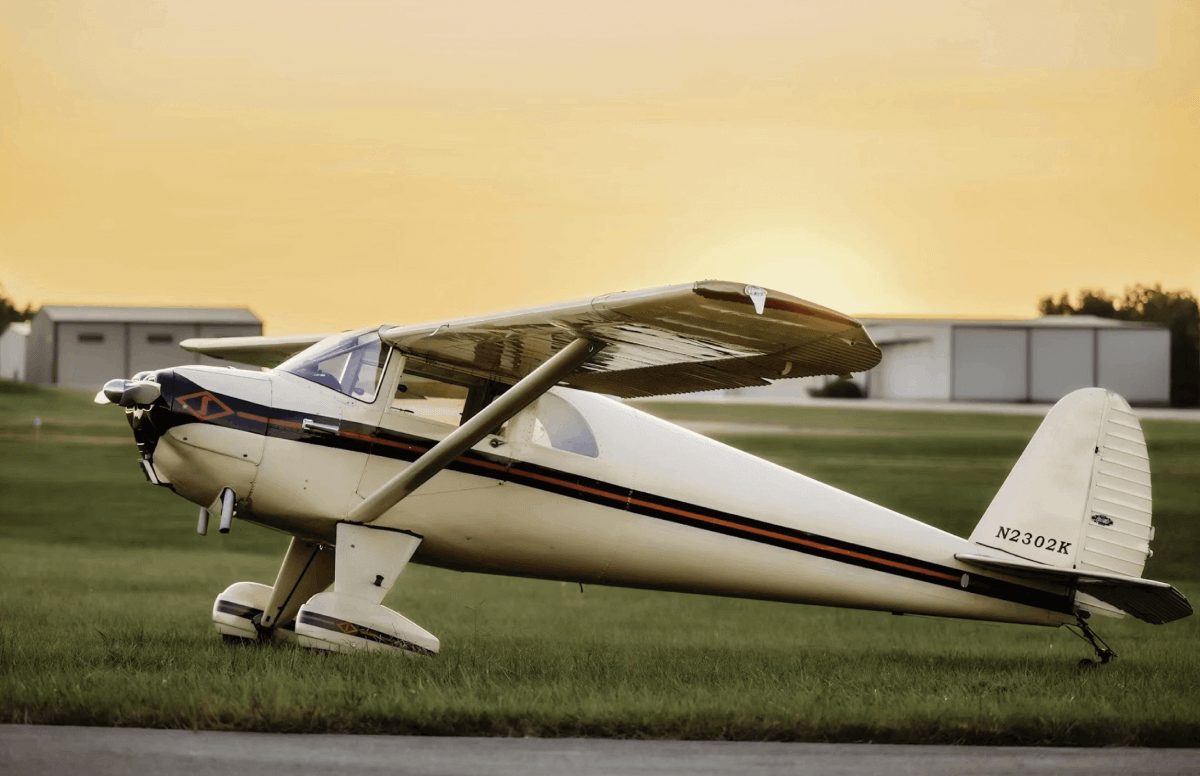












It was a warm summer afternoon in Prescott, Arizona. A pilot friend and I decided to fly my 1976 Cardinal over to Sedona Airport (KZEZ) for a late lunch. The Cardinal and I were fairly new to the area, but I respected its performance limitations and was careful to account for the elevation and temperature and the density altitude it would surely bring.
Since the 7,600-foot main runway was unavailable, I ran the numbers for the lightly-loaded Cardinal for takeoff on the 4,400-foot cross runway. Two on board, three-quarters fuel, no baggage, no sweat.

The first half of the takeoff was on a slight downgrade, acceleration seemed OK, and we broke ground about the same time as we crossed the longer Runway 21 Left/3 Right. However, after rotation, two things became fairly clear. First, the runway had a marked upslope after the intersection, and second, my trusty Cardinal was not climbing away from the ground like I planned.
So, what was a pilot new to the high and hot world of density altitude flying to do? More on that later.
In July, so many of us will be making the annual trip to Oshkosh, Wisconsin, for EAA AirVenture from near and far. For some, a one-hour flight over the lush Midwest farmland will suffice. For others, the trip includes several hundred miles of high desert and mountains between the California coast and the Wisconsin Dairyland.
And, yes, even the East Coast has its share of higher elevations over the hazy, blue ridges of the Appalachians. In most of these cases, a thorough understanding of density altitude and its impact on our flying is in order. But more than that, what we as thinking pilots do when faced with these high, hot, and even humid days is key to flying safely.
So, let’s get started.
Causes
Let’s review the three causes of higher density altitude.
First up is temperature. Even in lower elevations, high temperatures may yield unexpectedly high density altitudes. As hot days take the energy out of us humans, it also takes the energy out of the molecules that form the atmosphere. All this makes for sluggish, reduced performance. Propellers, wings, and engines all suffer when it gets hot.
The second is atmospheric pressure. When we start at a higher altitude, the pressure is already reduced, and when temperature is added, it can be a deadly mix. For example, at 18,000 feet, coincidentally at the beginning of Class A airspace, half of the atmosphere is compressed below your feet. At the 5,000-foot elevation of Prescott Regional Airport (KPRC), a neat 12 percent of the atmosphere is already lost.
The final and least impactful cause is humidity. Since low humidity and higher elevations go together, this factor is often negligible. However, taking off on a short runway with tall trees off the end, on a hot Florida day, with full fuel, all the seats filled, and a full baggage compartment, a couple hundred feet impact on density altitude might be a problem. It all adds up.

Photo: Cayla McLeod
Effects
We learned in the private pilot course that increasing the density altitude reduces the effectiveness of the propeller, the lift produced by the wings, and the power output of the engine.
However, there is an additional effect we do not often think about. Jet pilots are all aware that up in the flight levels, they thrive on the increased true airspeed that the low atmospheric density produces.
Up in the flight levels, jets fly at relatively low indicated airspeed and still cruise at 7-8 miles per minute. Meanwhile, down here in General Aviation Land, at a high density altitude, say 7,000 to 8,000 feet, our indicated airspeed will be lower than our true airspeed—just enough to fool us into believing we are already flying too fast.
Come to think of it, when I made my first few landings at the statute-mile-high Prescott airport, I remember thinking that I was still going a bit too fast in the flare for my liking. It should not have been a surprise, but it was. Glad the runway was so long. So, when I rotated for takeoff on that high density altitude day, did I rotate because I reached the correct indicated airspeed, or when the runway markers passing by looked fast enough to fly. Come to think of it, I am not sure? OK, more on that later.
Pilot Technique
Now that we have refreshed our memory of the characteristics of density altitude, let’s figure out how to defeat it on its home court.
First off, compute the takeoff data, believe the takeoff data, and add a bit of margin for pilot technique, inaccurate weather reports, or just plain Murphy’s Law. If the data is close, and the margins are thin, just don’t go. A little exercise of your credit card will get you dinner, a rental car, and a night’s stay. And in the morning, the air will be at its coolest, and the lift molecules at their most dense and friendly.
Second, learn how to lean the mixture properly before taking off. Down here on the sea-level Florida coast, full rich mixture for takeoff and landing are standard operating procedures. However, in the high desert of Arizona, we adjusted the mixture from immediately after engine start until engine shutdown, and everywhere in between. Before takeoff, leaning the mixture during a full power run-up, or at least during the magneto check, would yield an increase in power and rpm. Each aircraft engine and performance manual offer a little different take on this process, so take the time to read up on your particular machine and do not be afraid to lean with the little red knob.
Third, there is this little thing called ground effect. Your performance charts will tell you how to compute the acceptable takeoff distance, and may even have some advice about pilot techniques. The performance charts will tell you that your airplane will lift up off the runway, but if performance is marginal, you will need to build up additional speed to break free of ground effect.
Remember, your instructor demonstrated that ground effect was really noticeable about half a wingspan above the runway. So, if after takeoff, the airplane seems to sag at about 20 feet in the air, a thinking pilot will make gentle pitch changes and may even level off momentarily to build speed and continue the climb.
This is OK if the runway is long and the trees short—not so much if it is the other way around. Hmm, so that day at Prescott, did I lift off too early because of the higher ground speed, and then try to pull the Cardinal out of ground effect too early? Now that I think about it, I am not sure? OK, more on that later.
Aircraft Modifications/Decisions
It is always a good idea to use the right tool for the job.
While a stock Cessna 150 can fly successfully in the higher density altitudes, most of the home-based 150s in the high Arizona desert had the Lycoming 150 hp STC. It just made sense to counteract the loss of propeller and wing efficiency with good, old American horsepower.
Another popular modification is turbocharging. Compressing the intake air defeats horsepower loss, giving the wings and propellers more energy to work with. Turbochargers come as standard equipment or as modifications and are quite popular with those who fly full time at higher elevations. However, they are not inexpensive modifications and often require more attention to powerplant management during critical phases of the flight.
After flying our Cessna 177B Cardinal out West for a couple of years, I needed a bit more margin. So, I opted for the Power Flow-tuned exhaust system. Tuned exhaust is a basic requirement for high-performance race cars, and it made sense to give it a shot with my carbureted Lycoming O-360. These kinds of systems do not add horsepower to the engine, but rather they reduce power loss through the large collector box mufflers that come as standard equipment.
I found that this basic, but not inexpensive, addition to our airplane yielded a higher service ceiling, significantly stronger climb performance, and more importantly, more oomph on takeoff and initial climbout getting us out of ground effect. Oh, and my friends tell me the Cardinal now sounds like one of those little Hondas with the raspy exhaust that pass you on the street from time to time. Not sure, but I think that is a compliment?
So, What Happened?
Let’s go back to the beginning and replay the tape on that takeoff in the Cardinal in Prescott.
Before we took the runway, I leaned the mixture during the run-up, although maybe not as aggressively as in the years of flying that followed. As I pushed up the power on that hot afternoon on Runway 21, the aircraft accelerated down the gentle incline toward the runway intersection. So far, so good.
Upon reaching the intersection, I rotated off the ground gently. At this point the speed I sensed by looking out the window seemed normal. However, my indicated airspeed might have been a bit lower than I was used to at lower altitudes. From this point on, the runway sloped upward, and instead of climbing steadily away from the ground, we seemed to hang up about 20-30 feet above the gently rising pavement.
Resisting the temptation to pull the nose up, I let the Cardinal build up speed, and by the end of the 4,400-foot runway, we had made it out of ground effect. That was a good thing because the end of that runway features a steep drop-off. However, it was a long runway, and the trees were short, so we passed the test.
What Did I Learn?
The end result was a safe, but definitely uncomfortable takeoff. It was one that I would not repeat.
I am constantly reminded of the quote by former major league pitcher Vern Law: “Experience is a hard teacher because she gives the test first, the lesson afterward.” In this case, we passed the test, with a minimum score.
In the case of density altitude, it is often the combination of several effects that catches us out. The higher ground speed, when combined with the loss of aircraft efficiency, may make us believe that the airplane has more energy than it actually does. Poor pilot technique, attempting to make the aircraft take off or climb before it is ready, only adds to the problem. And, of course, deciding to go in the first place when the performance manual says the margins are really tight is the first—and often fatal—mistake.
Treating density altitude with the respect it demands ensures a passing score. Have a safe flight on those high and hot days, and we will see you at Oshkosh.