










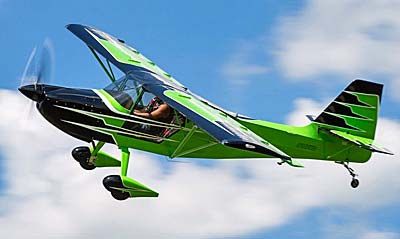

 In the normal order of things, a successful product will probably remain in production until demand slackens, technology changes or it can’t be built effectively. But there are other reasons, some not so obvious. Case in point? Kitfox Aircraft. Since 2009, when the company began selling the Series 7 Sport, it’s cranked out roughly 40 of the factory-built LSAs, with sales always outpacing the company’s ability to produce for the first few years. Eventually, Kitfox began selling the S7 Sport with various engine options, up to the Rotax 914. Sales over the last few years have slowed to a relative trickle, but not really for reasons you’d think.
First of all, the company’s bread-and-butter is the kitbuilt side of the market, so when the factory buildings are busy and full to overflowing and the order book is growing, company owner John McBean elected to prioritize the kit side of the business over the ready-made side. He describes it as a balancing act but understandably so; you want to keep your core customer happy. And so this partly explains why Kitfox is quietly putting the SLSA business on hold.
But it’s not the only excuse. According to McBean, the simple fact is that today’s customers demand better equipped airplanes. They want really nice paint. They want two-screen EFISes and the most powerful engine available, which, today, is the 160-hp Rotax 916. They want nice interiors and all the options.
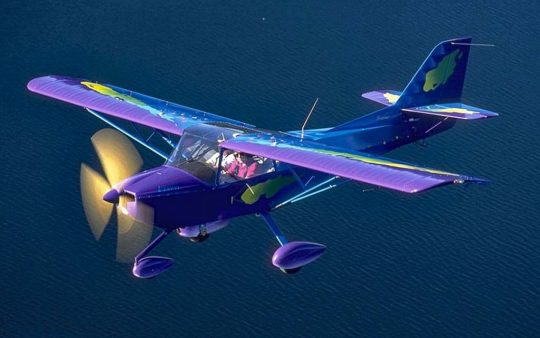 Such niceties add not just cost but weight. And in the SLSA rules, there’s a minimum useful load of 430 pounds, which means an empty weight of 890 pounds or less. In the robust Kitfox, you can get there with a lightweight avionics package and the lighter-weight Rotax 912 ULS or iS, but once you start ticking off the options boxes and pop for the 916, it’s much more difficult to do. And the simple fact is that a fully equipped, highly optioned airplane is what customers want.
So what’s McBean’s solution? Shift those resources from the SLSA whole-build to a program of factory builder assistance, much like some of the other types where the builder comes to the factory to participate in the build. The resulting Experimental/Amateur-Built aircraft has a lot more flexibility in content and maintenance.
What of MOSAIC, you ask? The current Kitfox Series 7 models all are engineered for a 1550-pound maximum gross weight, which would fall well into the current MOSAIC proposal, and so would the stall speed. There are no reasons the highest-spec Series 7 won’t be a good MOSAIC airplane to be flown by Sport Pilots under the new rules. Whether Kitfox resumes building SLSA models is more a matter of what the market demands than what can be produced out of the Homedale, Idaho, factory.