










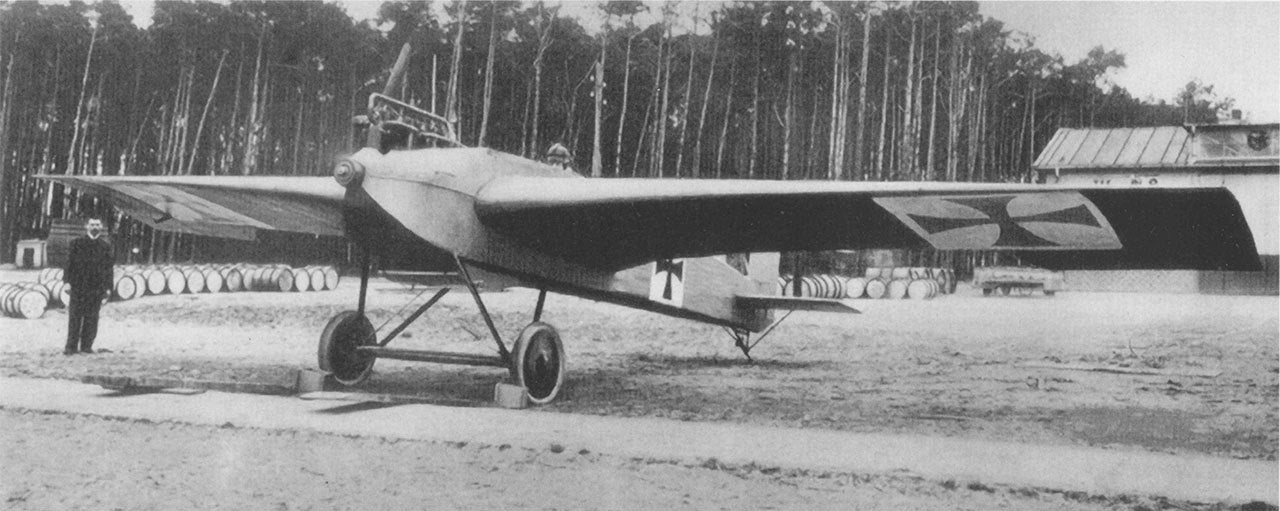
Speaking of new standards, the Junkers J1 of 1915 was the first plane to feature all-metal design, a materials approach that would catch on here and there but not be fully adopted until shortly before World War II, 20 years down the line. It’s hard to blame the world too much for not going to metal for airplane design. The idea would’ve sounded insane. Metal was very heavy. It wasn’t until well after the Wrights’ first flights that a suitable aluminum alloy, duralumin, was developed, and even then the first efforts were rough. But once the alloy got its groove on, the rest was history. Light, easily malleable, strong and easy to fasten sheets together, the material was just what aviation was looking for. The J1 was an experimental project airplane, but what the company created would go on to set new standards for materials construction.
Junkers J1, 1915

Key Takeaways:
- The 1915 Junkers J1 was the first all-metal aircraft, pioneering a design approach that would not be fully adopted until shortly before World War II.
- Initial slow adoption of all-metal designs was due to the perception of metal being too heavy and the idea seeming impractical.
- The eventual widespread success of all-metal aviation was enabled by the development of suitable aluminum alloys, such as duralumin, which were light, strong, and easily workable.
See a mistake? Contact us.
