











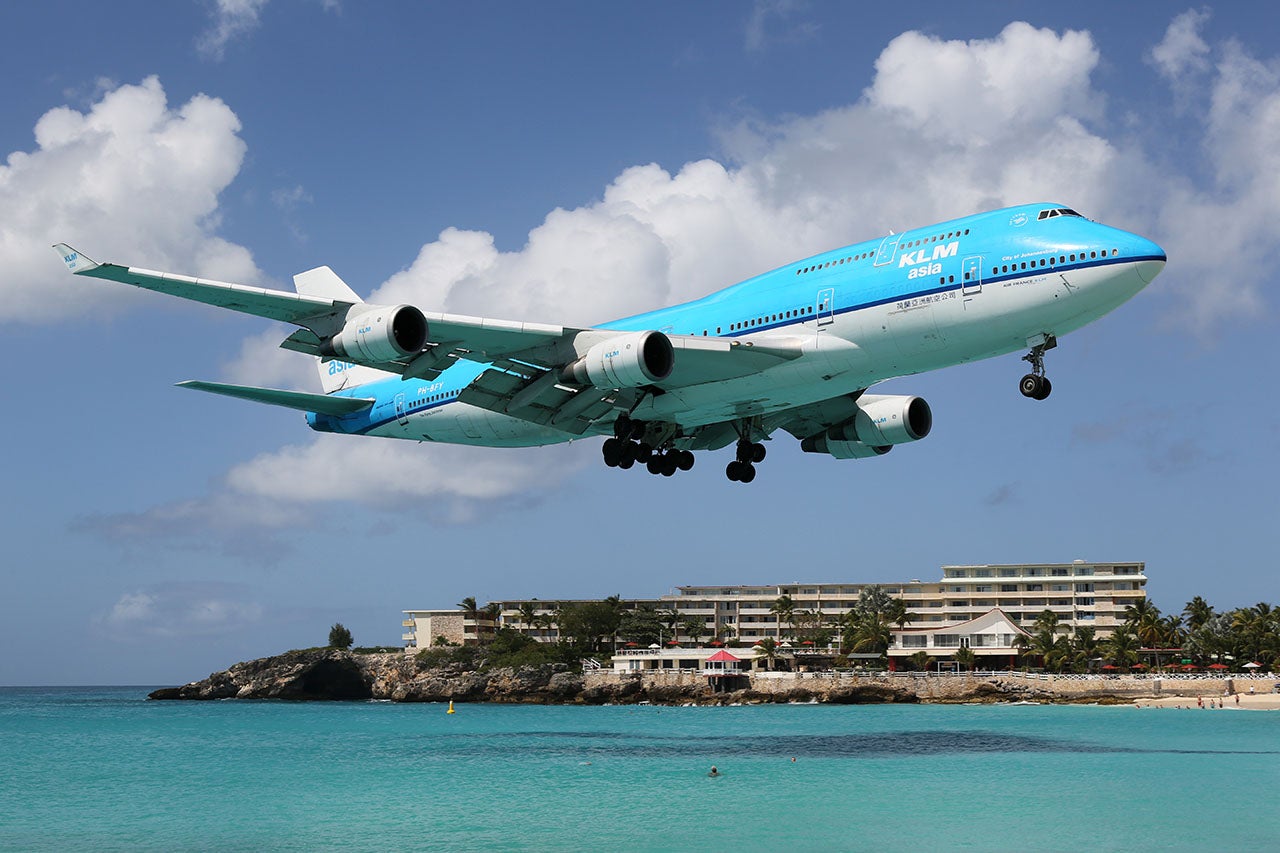
Upon its introduction in 1970, the Boeing 747, the original jumbo jet, was a sensation. In an era where bigger was better, it was the biggest airliner by far. Capable of carrying more than 350 passengers on two decks, the 747, with its distinctive hump, sold well, though the routes it most typically flew were longer, overwater routes. A good part of the credit for the 747’s iconic status was courtesy of Boeing and its customer airlines, which effectively positioned the jumbo jet as a luxury experience and even equipped some with piano bars to drive home the point, in essence turning the type’s brand vulnerabilities into strengths. For operators, the sheer size of the plane might not have been enough on its own, but the 747 was also fast, around Mach .85, substantially faster than its competitors. The result was, the 747 could cut a substantial amount of time from long routes.
Boeing 747

Key Takeaways:
- The Boeing 747, introduced in 1970, revolutionized air travel as the largest airliner of its time, capable of carrying over 350 passengers on two decks.
- It was successfully positioned as a luxury experience by Boeing and customer airlines, leveraging its large size for amenities like piano bars.
- Beyond its capacity, the 747 was notably fast (around Mach .85), significantly reducing travel times on its typical long, overwater routes.
See a mistake? Contact us.