












It’s hard to make a twin look pretty. By definition you’ve got to hang those engines somewhere, and sticking them on the wing is about the only thing that makes practical sense with a piston-powered multi-engine model. So the design achievement of Cessna with its archetypal 310 light twin is remarkable. Unlike some models, the 310, which was produced from 1954 until 1980, seemed to look better with each passing model upgrade. The long, low-engine nacelles, the pointed nose and rakish tail all added to the allure. Like many twins, the early 310 suffered from a lack of range, so tip tanks were added.
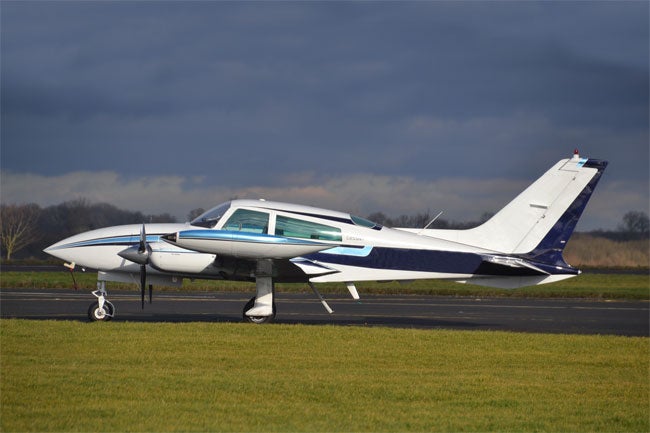
As opposed to some planes, on which wingtip-mounted tanks look like tacked-on afterthoughts—which they pretty much are—on the 310, the effect is pleasing. They somehow improve the appearance of the plane. Even more, the effect is to take the Buck Rogers spacecraft feel of the 310 and amplify it, making it one of the slickest-looking planes you’ll ever meet on the ramp, even with those engines hanging off all over the wings. Inside the 310 is arguably even cooler, at least those rare ones with their original interiors intact. Over the years, Cessna interior designers worked their magic on the plane like none other in the inventory. There were plaid interiors, Western-themed ones and even butterscotch tweed versions. Many of those masterful time capsules have been sewn over in the intervening years, covered with simulated leather for what is perhaps a more saleable used plane but one that lacks the time stamp and personality of the original.