









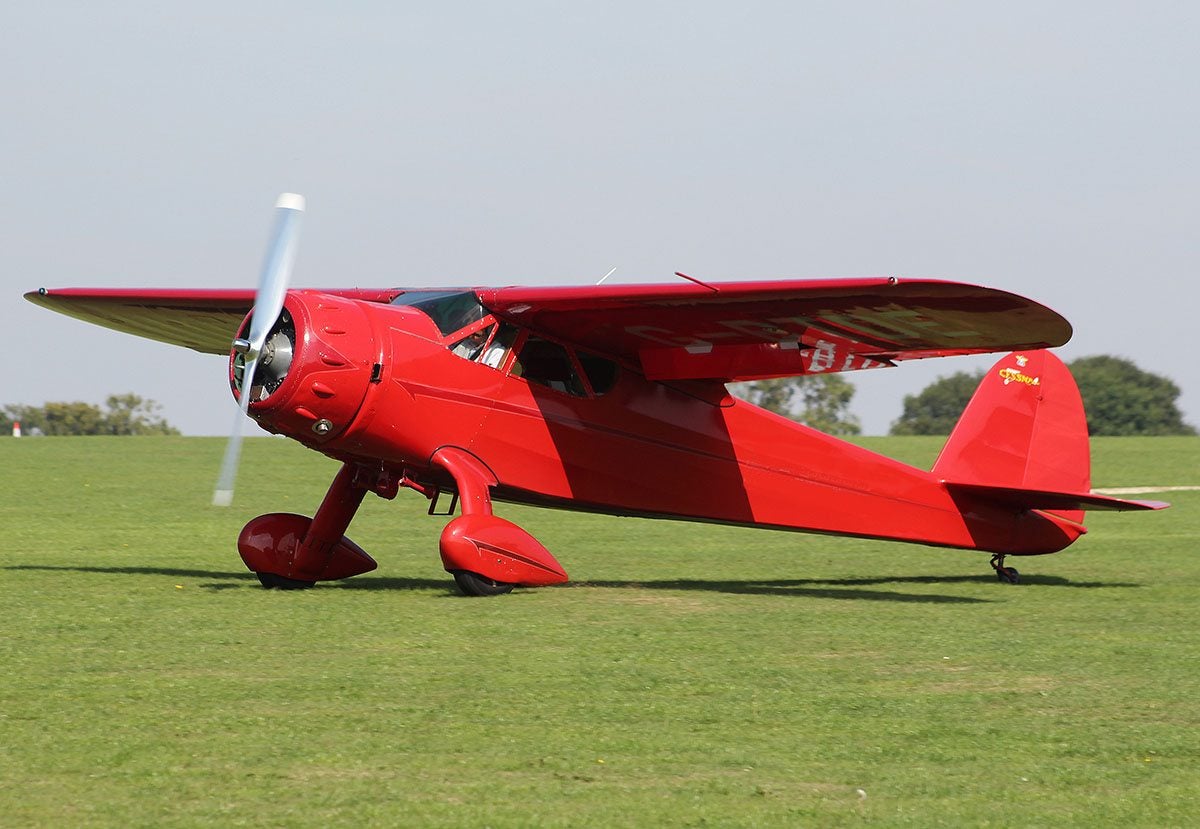
Sometimes the original ancestor airplane gives few clues that it could someday inspire the kind of state-of-the-art product we know that it ultimately will. And so it is with the Cessna Airmaster, a mid-’30s advancement that, as the company surely knew, wasn’t advanced enough. It was and remains a beautiful aircraft, and it was competitive with a couple of other cabin monoplanes of the day from Stinson and others, though it had little to distinguish it from them. Perhaps its most noteworthy design feature is its cantilever wing. But in terms of materials, the Airmaster, with its fabric-covered, welded steel fuselage, wood wings and radial engine/taildragger design, was decidedly old school. But you probably know just where this is going. First flight: Aug. 19, 1934. Number built: 183. Status: Out of production.
Airmaster

Key Takeaways:
- The Cessna Airmaster was a beautiful and competitive mid-1930s cabin monoplane, notable for its cantilever wing but otherwise lacking distinctive features.
- Its construction, using fabric-covered steel, wood wings, and a radial engine/taildragger design, was considered "old school" even for its era.
- Despite its modest advancement, the Airmaster served as an early ancestor for Cessna, hinting at the company's future state-of-the-art products.
See a mistake? Contact us.