










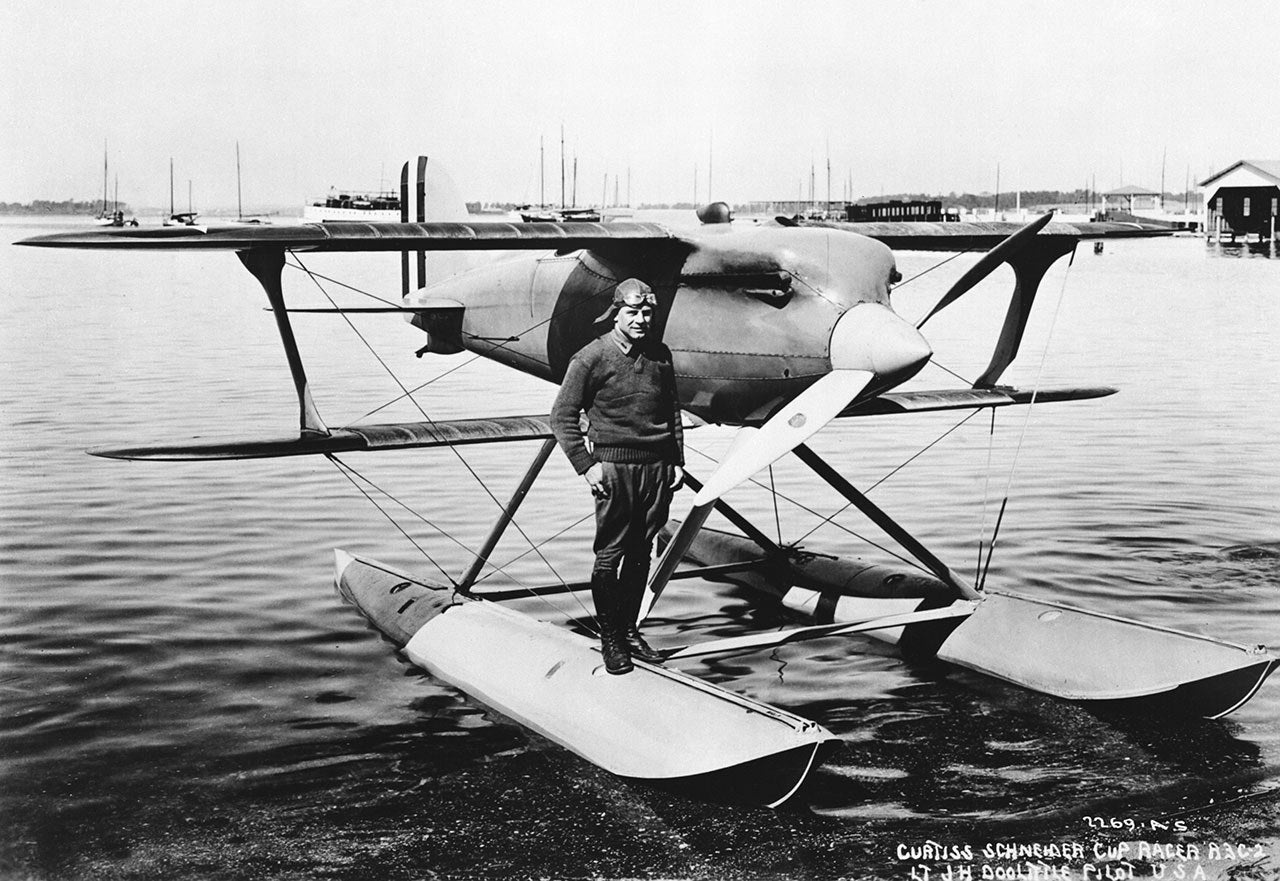
Barely 20 years out from Kitty Hawk, the new race in aviation was for all-out speed, and the airplanes that became the ultimate machines in that quest were seaplanes. Held from 1913 to 1931, the Schneider Trophy, often referred to as the Schneider Cup, was a global competition that companies and nations used to push the state of the art. While the R3C would be surpassed in subsequent years, its achievements were eye opening. A decade after the 100 mph mark had been eclipsed, the R3C-2 streaked along at 245 mph, a speed that most airplane owners today would and do pay a lot to achieve. Why seaplanes? It was all about the takeoff roll. With these planes using very small wings to cut drag, they needed all the distance they could find to get airborne.
Curtiss R3C, 1925

Key Takeaways:
- The Schneider Trophy (1913-1931) was a global competition that significantly advanced aviation speed, especially for seaplanes.
- The R3C-2 seaplane achieved an impressive 245 mph, a dramatic increase from 100 mph a decade prior.
- Seaplanes were preferred for these speed quests because their small, drag-reducing wings required long takeoff distances, which water surfaces provided.
See a mistake? Contact us.