










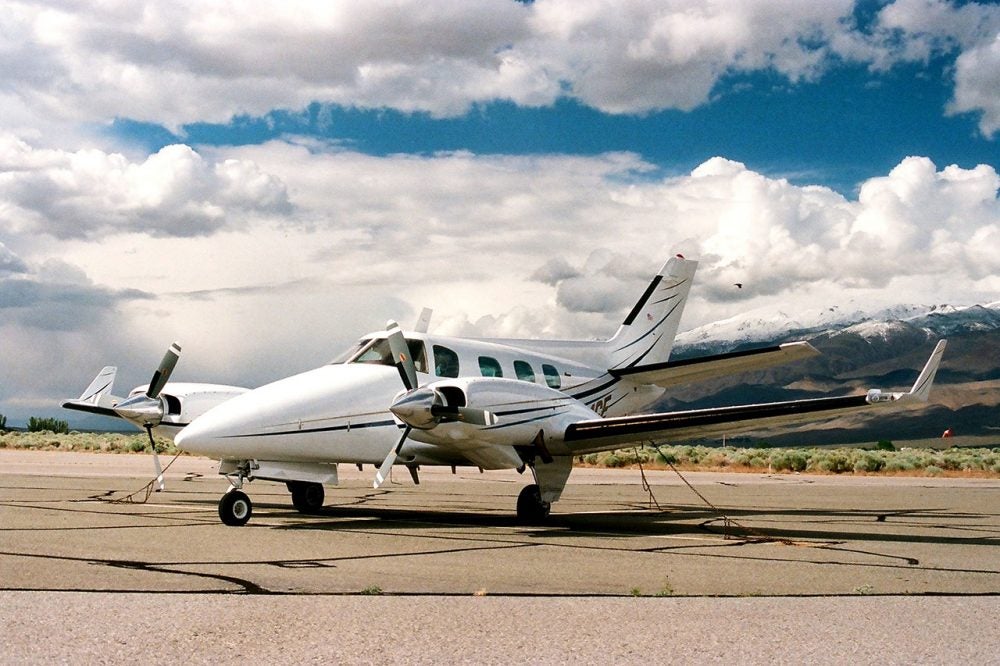
The most prima facie obvious justification for having two engines is to negate the single’s inherent hazard of failure in its one and only powerplant. The theory being, the twin will be able to successfully continue flight on a single engine so that it can wind up on an airport instead of in a field. When flying at night, in low IMC, or over water and inhospitable terrain, the twin-engine airplane bestows a measure of confidence onto its occupants.
The dirty little secret of light twins is that as airplanes scale up in payload, speed and range capability, the real purpose of a second engine is simply to make the plane fly. It takes all of the combined horsepower to haul the extra people and fuel in the desired manner. The perceived safety enhancement of redundant powerplants is secondary from a design standpoint because the vast majority of the airplane’s life is spent with both engines running.
Consider a twin-engine airplane with 200-hp engines that requires a minimum of 150 hp to maintain level flight. With both engines at full power, there’s 250 extra horsepower available to create an exhilarating climb and cruise speed. When one engine fails, only 50 extra horsepower is available, resulting in an anemic climb rate and a much-depressed service ceiling.
And so, demonstrating the light twin-engine airplane to a prospective buyer moving up from a high-performance single always focused on the acceleration during takeoff, rapid climb rate and high-speed cruise, with a glance directed at the big cabin following behind. That enchantment with miniature-airliner capability is what sold twin-engine airplanes. The engine-out performance may have been given but passing reference, perhaps with a quick demonstration of a zero-thrust maintenance of level flight, always with a light load to enhance its success.
The other attractions of twin-engine airplanes over singles are their redundant sources of electrical power, deicing and pressurization, greater seating and baggage capacity, a bigger instrument panel and less engine vibration transmitted to the cabin. The two-motor airplane’s wing and power loadings make it a great instrument-flying platform.